







For business corporations, software developers, game players, and websites that are expanding, using dedicated servers can be the perfect way to host websites. As opposed to shared web hosting services, in dedicated server hosting, the whole physical server is dedicated to a single client only. It implies that no other website can access any of the server’s resources except for you.
However, one of the first questions people ask before choosing this type of hosting is: how much do dedicated servers cost?
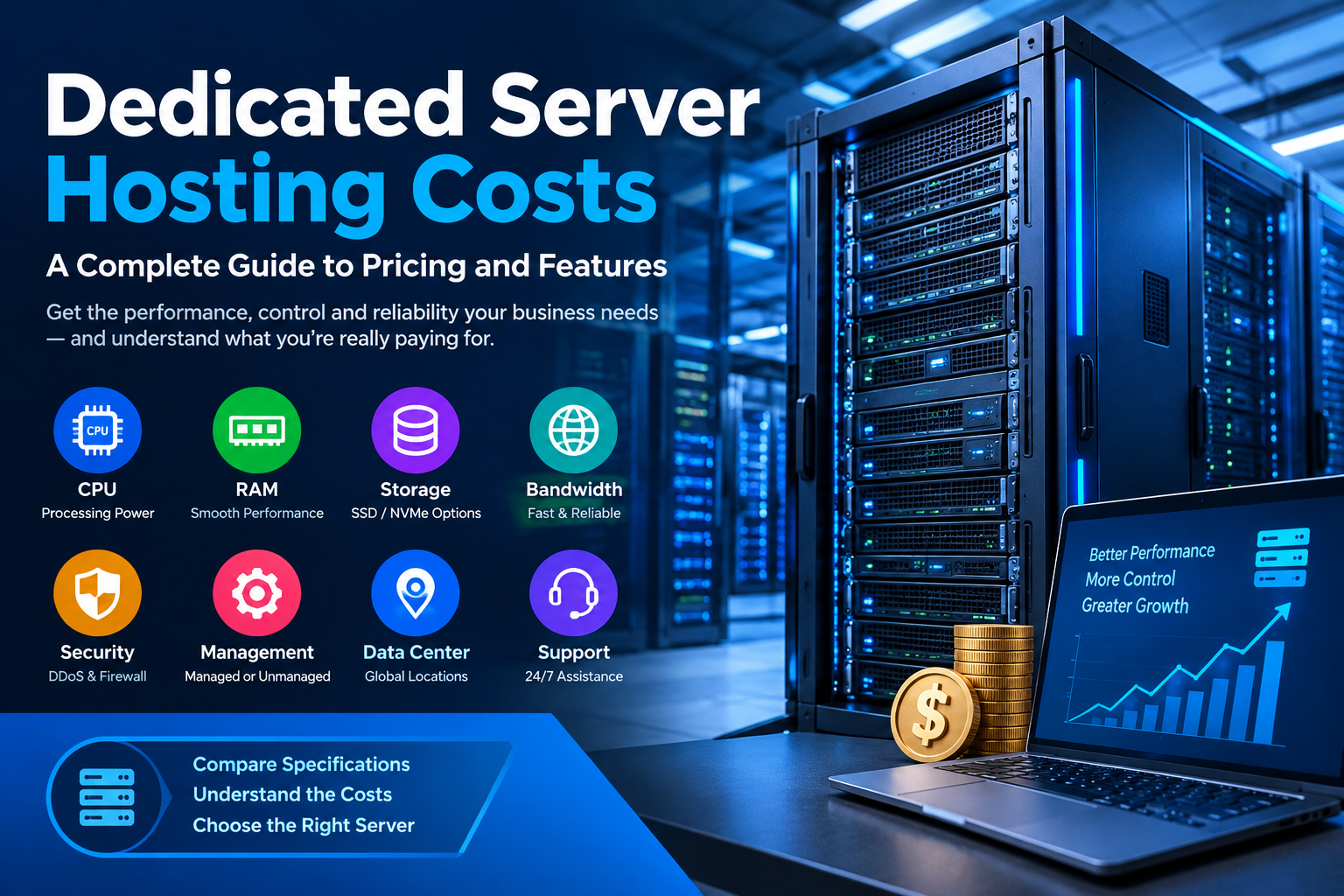
Understanding dedicated server hosting costs is important because the monthly price can vary significantly depending on hardware, bandwidth, storage, server management, security, data center location, and additional services.
This guide explains the factors that affect dedicated server pricing, what you can expect to pay, what features influence the cost, and how to choose a server that provides the right balance between performance and budget.
What Is Dedicated Server Hosting?
Dedicated server hosting is a hosting solution where an entire physical server is allocated to a single customer. Instead of sharing resources with hundreds of other websites, your applications and websites use the server’s hardware exclusively.
A dedicated server usually includes resources such as:
- Dedicated CPU
- Dedicated RAM
- SSD or NVMe storage
- Network bandwidth
- Dedicated IP addresses
- Operating system
- Server management options
- Security features
- Monitoring and support
The above makes dedicated hosting appropriate for sites that require stable performance and high resource availability.
For instance, an eCommerce site that receives thousands of hits on a daily basis may require additional resources that are not available on the usual shared hosting plans. In the same vein, businesses using databases, SaaS apps, game servers, or any software that consumes many resources could use dedicated hardware.
How Much Does Dedicated Server Hosting Cost?
The cost of a dedicated server depends on the configuration and provider. Entry-level dedicated servers may start at a relatively low monthly price, while high-performance enterprise servers can cost several hundred dollars or more per month.
A basic dedicated server might include:
- 4 to 8 CPU cores
- 16–32 GB RAM
- SSD storage
- 1 Gbps network connection
- Basic server management
A more powerful configuration could include:
- High-core-count processors
- 64–256 GB RAM
- Multiple NVMe drives
- Large storage capacity
- High bandwidth
- Advanced security
- Managed support
Therefore, there is no single price that applies to every dedicated server.
The best way to understand dedicated server hosting costs is to look at the individual features included in the hosting plan.
Factors That Affect Dedicated Server Hosting Costs
Several important factors influence the price of a dedicated server. Understanding these factors can help you avoid paying for resources you do not actually need.
1. CPU Performance
The processor is one of the most important components of a dedicated server.
A server with a basic processor will generally cost less than a server equipped with a high-performance CPU containing many cores and threads.
CPU performance becomes especially important for:
- Large databases
- Virtualization
- Video processing
- Gaming servers
- AI applications
- High-traffic websites
- Business applications
If your workload requires significant processing power, spending more on a better CPU may be worthwhile.
However, you should not automatically choose the most powerful processor available. A website that receives moderate traffic may not need an expensive high-core CPU.
2. RAM
RAM also has a direct impact on server pricing.
A small website might work comfortably with 16 GB or 32 GB of RAM, while larger applications may require 64 GB, 128 GB, or more.
More RAM allows the server to handle more applications and processes simultaneously.
For example, additional RAM can be useful when running:
- Multiple websites
- Large databases
- Virtual machines
- Game servers
- Control panels
- Caching systems
- Business applications
When comparing dedicated server hosting costs, always check how much RAM is included in the monthly price.
3. Storage Type
Storage technology is another major factor.
Traditional HDD storage is generally cheaper, while SSD storage provides better performance. NVMe SSDs can provide even faster data access and are often used for demanding workloads.
You may see dedicated servers with:
- HDD storage
- SATA SSD
- Enterprise SSD
- NVMe SSD
- Multiple-drive configurations
If your application performs many read and write operations, NVMe storage can make a significant difference.
For websites and applications where speed is important, SSD or NVMe storage may be preferable to traditional HDD storage.
4. Bandwidth and Network Speed
Bandwidth is another important part of dedicated server hosting costs.
Some providers offer a specific monthly bandwidth allowance, while others advertise unmetered or unlimited bandwidth under certain conditions.
Network speed can also vary.
Common options include:
- 100 Mbps
- 1 Gbps
- 2.5 Gbps
- 10 Gbps
A website with normal traffic may not need a 10 Gbps connection. However, applications that transfer large amounts of data may benefit from a faster network connection.
Before selecting a server, consider both the connection speed and the provider’s bandwidth policy.
5. Data Center Location
The location of the server may impact the cost as well.
Operating costs will differ according to the country or region where the data center is located. Operating expenses may be influenced by electricity costs, real estate, network connectivity, infrastructure, and market conditions.
Website Performance
When you have customers from a certain region, it is better to locate the data center near your target customers to minimize network latency.
For instance, when a company caters to its customers from Europe, then a European data center may suit the business, and similarly, when catering to its customers from Asia, an Asian data center will be suitable.
6. Managed vs. Unmanaged Servers
One of the biggest differences in hosting prices is whether the server is managed.
Unmanaged Dedicated Server
With an unmanaged server, the hosting provider generally supplies the physical infrastructure while the customer handles most server administration.
You may need to manage:
- Operating system updates
- Software installation
- Security configuration
- Firewall settings
- Server optimization
- Backups
- Troubleshooting
Because you handle more technical responsibilities, unmanaged servers are often cheaper.
Managed Dedicated Server
Managed hosting includes additional technical assistance from the hosting provider.
Depending on the provider, management may include:
- Operating system updates
- Security monitoring
- Server optimization
- Backup management
- Technical support
- Software installation
- Performance monitoring
Managed servers generally cost more because you are paying for additional services and technical support.
If you are not comfortable managing Linux or Windows servers, managed hosting can make administration easier.
7. Operating System
The operating system can also influence hosting costs.
Linux distributions such as Ubuntu, Debian, AlmaLinux, and Rocky Linux are commonly available at no additional licensing cost from many providers.
Windows Server may involve additional licensing fees depending on the hosting provider and plan.
When comparing prices, check whether the operating system license is included.
This prevents unexpected charges from appearing on your monthly bill.
8. Control Panel
A control panel can make server management easier.
Popular control panel options may include tools for:
- Website management
- Database management
- Email accounts
- DNS configuration
- File management
- Application installation
Some control panels are free, while others require a monthly license.
Therefore, if you need a commercial control panel, include its license price when calculating your total dedicated server hosting costs.
Dedicated Server Hosting Costs by Server Type
Not every dedicated server is designed for the same workload.
Entry-Level Dedicated Servers
Entry-level servers are designed for customers who need dedicated hardware without requiring extremely powerful specifications.
They may be suitable for:
- Small businesses
- Growing websites
- Development projects
- Low-to-medium traffic applications
- Basic databases
These servers typically provide fewer CPU cores and less RAM than premium configurations.
Mid-Range Dedicated Servers
Mid-range servers provide a balance between performance and cost.
They can be useful for:
- Busy websites
- eCommerce stores
- Business applications
- Medium-sized databases
- Multiple websites
- Development environments
For many businesses, this type of configuration can provide enough performance without the cost of enterprise hardware.
High-Performance Dedicated Servers
High-performance servers are designed for demanding workloads.
They may include:
- High-end CPUs
- Large amounts of RAM
- NVMe storage
- Multiple storage drives
- High-speed networking
- Advanced hardware options
These servers can be used for large databases, virtualization, gaming infrastructure, high-traffic applications, and other resource-intensive workloads.
Hidden Costs to Consider
When comparing dedicated server hosting costs, do not look only at the advertised monthly price.
There can be additional costs depending on the provider.
Setup Fees
Some hosting providers charge an initial server setup fee.
Others include setup at no additional cost.
Always check the total first-month price before ordering.
Backup Costs
Backups may not always be included.
If your provider charges separately for backups, calculate this expense as part of your total hosting budget.
Reliable backups are particularly important for business websites and databases.
Additional IP Addresses
Some businesses require multiple IP addresses for specific applications.
Additional IP addresses may have separate costs or require justification depending on the provider.
Security Services
Advanced security services can increase the total monthly price.
Possible services include:
- DDoS protection
- Malware monitoring
- Security scanning
- Managed firewall
- Intrusion detection
- Advanced monitoring
Not every project needs every security service, so evaluate your actual requirements before paying for additional features.
Dedicated Server vs. VPS Hosting Costs
Many people compare dedicated servers with VPS hosting because both can provide more resources than shared hosting.
A VPS divides a physical server into multiple virtual environments. Each VPS receives an allocated amount of CPU, RAM, storage, and other resources.
A dedicated server gives you the entire physical machine.
VPS Hosting
Advantages:
- Lower cost
- Easy to scale
- Suitable for smaller applications
- Good resource isolation
- Flexible configurations
Dedicated Server
Advantages:
- Entire physical server
- More hardware resources
- Greater control
- Consistent performance
- Suitable for demanding workloads
If your application does not require an entire physical machine, a VPS may be more economical.
However, when resource requirements become high, dedicated hosting can provide the additional performance and control you need.
How to Choose a Dedicated Server on a Budget
Choosing the cheapest server is not always the best approach.
Instead, start by identifying your actual requirements.
Ask yourself:
- How much RAM does my application need?
- How many CPU cores are required?
- Do I need SSD or NVMe storage?
- How much storage space do I need?
- How much monthly bandwidth will I use?
- Do I need managed support?
- Do I need a control panel?
- Where are my customers located?
- Do I need advanced DDoS protection?
- What backup solution will I use?
Once you answer these questions, you can compare hosting plans more accurately.
For example, paying for 128 GB of RAM when your application uses only 16 GB may unnecessarily increase your monthly expenses.
At the same time, choosing an extremely cheap server that cannot handle your workload can result in slow performance and future upgrade costs.
How to Calculate Your Total Hosting Budget
A simple way to calculate your monthly hosting budget is:
Monthly Server Cost + Management + Backup + Control Panel + Security + Additional Services = Total Monthly Cost
For example, suppose a hosting plan has a base price but requires separate charges for:
- Server management
- Backup storage
- Control panel
- Additional IP addresses
The advertised server price will not represent the actual amount you pay every month.
Always calculate the complete package.
This is especially important for businesses that need predictable monthly expenses.
What Makes a Dedicated Server Worth the Cost?
The value of dedicated hosting depends on what you need from your server.
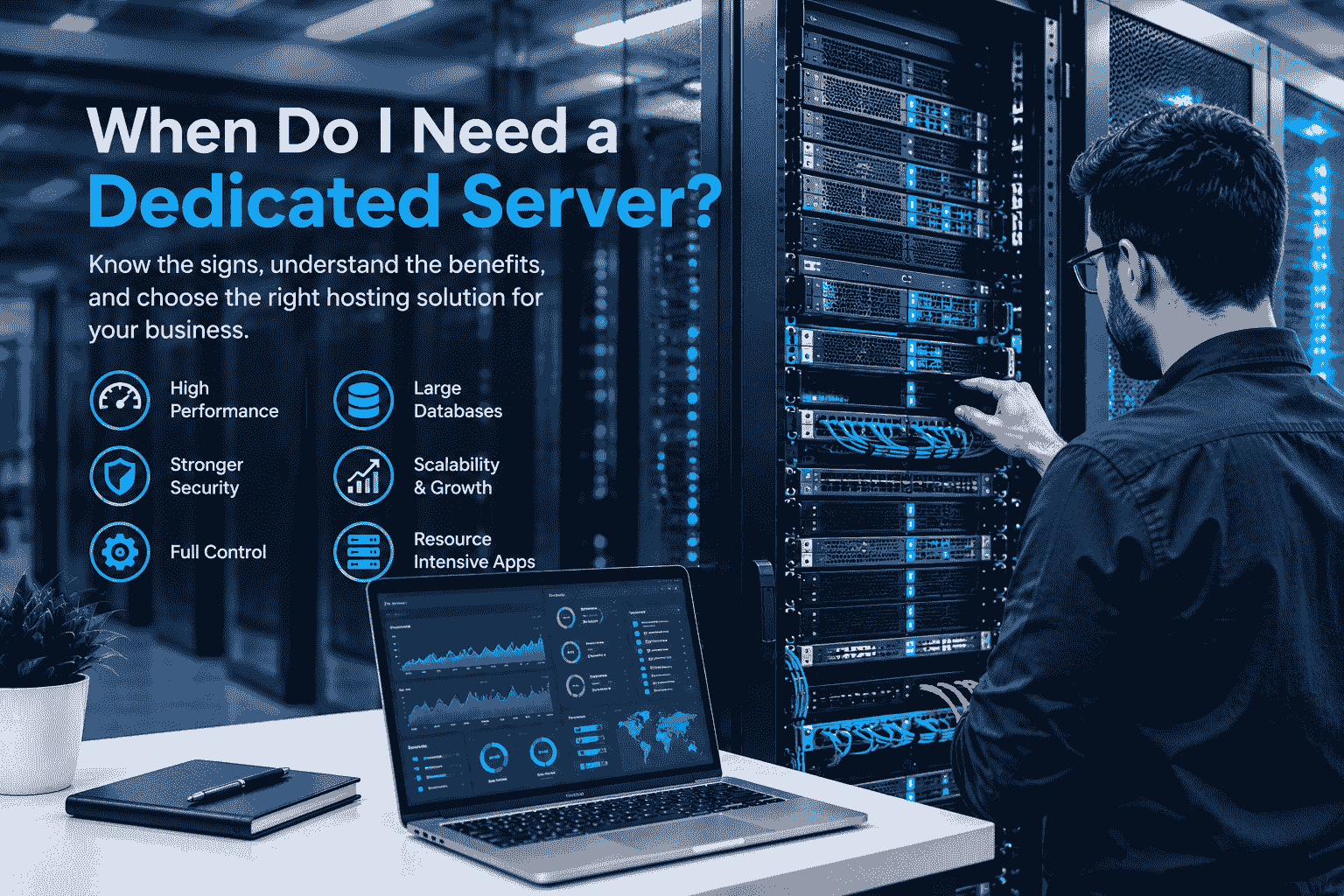
A dedicated server may be worth the investment when:
- Your website has high traffic
- Your application requires consistent resources
- You operate a large database
- You need full server control
- You run multiple resource-intensive applications
- You need advanced customization
- Your business requires predictable performance
Dedicated hosting can also provide more flexibility than shared hosting because you have greater control over the server environment.
However, not every website needs dedicated hardware.
Small websites with low traffic may be perfectly capable of running on shared hosting or VPS hosting.
Common Mistakes When Comparing Dedicated Server Hosting Costs
Choosing Based Only on Price
A low monthly price may look attractive, but it may come with limited resources or additional fees.
Always compare the complete specifications.
Ignoring Hardware Specifications
Two servers may have similar prices but very different CPUs, RAM, storage, and network configurations.
Read the hardware specifications carefully.
Paying for Resources You Do Not Need
More resources are not automatically better.
If your application does not use them, you may be wasting money.
Forgetting Backup Costs
Backups are important, but they may be charged separately.
Include them in your budget.
Ignoring Server Management
If you are not experienced with server administration, choosing an unmanaged server solely because it is cheaper may create additional technical work.
Consider the value of managed support when calculating the total cost.
Dedicated Server Hosting Costs for Businesses
Businesses often have different hosting requirements than personal websites.
A business may need:
- Reliable uptime
- Strong security
- Regular backups
- High performance
- Technical support
- Scalable infrastructure
- Multiple IP addresses
- High bandwidth
For these customers, the cheapest hosting plan may not necessarily be the most suitable.
Instead, businesses should compare the total infrastructure cost with the performance and services included.
A reliable server can support websites, applications, databases, internal tools, and customer-facing services from one dedicated environment.
How to Reduce Dedicated Server Hosting Costs
There are several ways to control your hosting expenses.
Choose the Right Hardware
Select hardware based on actual usage rather than choosing the largest configuration.
Compare Providers
Compare CPU, RAM, storage, bandwidth, support, management, and security instead of comparing only monthly prices.
Use Long-Term Billing Carefully
Some providers offer discounts for longer billing periods. Before choosing an annual or multi-year plan, make sure the configuration meets your expected requirements.
Review Add-On Services
Remove unnecessary services and licenses when they are not required.
Monitor Resource Usage
Regularly monitor CPU, RAM, storage, and bandwidth usage.
If your server is consistently underutilized, you may be able to move to a smaller configuration.
If your resources are consistently maxed out, upgrading may prevent performance problems.
Dedicated Server Hosting Costs and Scalability
Scalability should also be considered when choosing a server.
A business may start with a relatively small dedicated server and later need additional resources as traffic grows.
Before selecting a provider, check whether upgrades are available.
For example, you may eventually need:
- More RAM
- Additional storage
- Faster CPUs
- Higher network speeds
- Additional IP addresses
- More backup capacity
A provider that offers flexible upgrades can make future growth easier.
Frequently Asked Questions About Dedicated Server Hosting Costs
How much does dedicated server hosting cost?
Dedicated server pricing varies based on hardware, bandwidth, management, location, operating system, and additional services. Entry-level configurations are generally less expensive than high-performance enterprise servers.
Is dedicated hosting more expensive than VPS hosting?
In most cases, dedicated hosting costs more because you receive an entire physical server instead of a virtual portion of a physical machine.
Why are dedicated servers expensive?
Dedicated servers require physical hardware, data center space, electricity, network connectivity, maintenance, security, and technical infrastructure. Higher-end hardware and managed services can increase the price further.
Is managed dedicated hosting worth the additional cost?
It depends on your technical experience and project requirements. Managed hosting can be useful if you do not want to handle server administration, updates, security, and troubleshooting yourself.
Can I reduce my dedicated server costs?
Yes. You can reduce costs by selecting appropriate hardware, comparing providers, avoiding unnecessary add-ons, monitoring resource usage, and choosing a configuration that matches your workload.
Do dedicated servers include backups?
Not always. Backup policies vary between hosting providers, so you should check whether backups are included or available as an additional service.
Do I need a dedicated server for my website?
Not necessarily. Smaller websites can often operate effectively on shared hosting or VPS hosting. Dedicated servers are generally more appropriate when a website or application requires greater resources, control, or consistent performance.
Can I upgrade a dedicated server later?
Many hosting providers offer hardware upgrades, but the available options depend on the provider and server configuration. Check the upgrade policy before purchasing.
Final Thoughts on Dedicated Server Hosting Costs
Understanding dedicated server hosting costs requires looking beyond the advertised monthly price. CPU performance, RAM, storage, bandwidth, data center location, management, security, backups, operating system licensing, and control panels can all affect your final cost.
The right server is not necessarily the most expensive server. It should provide enough resources for your current workload while giving you room to grow.
Before purchasing a dedicated server, compare the complete specifications and calculate the total monthly cost. Consider both the hardware and the services you actually need.
For businesses, developers, gaming communities, and high-traffic websites, dedicated hosting can provide powerful resources, greater control, and predictable performance. By carefully comparing configurations and understanding the factors that influence pricing, you can choose a dedicated hosting solution that fits your technical requirements and budget.



One thought on “Dedicated Server Hosting Costs: A Complete Guide to Pricing and Features”