








If you are looking for a reliable hosting solution that provides more control than shared hosting but does not require the cost of a dedicated server, a fourplex VPS can be an option worth understanding. VPS hosting has become popular among businesses, developers, website owners, agencies, and online applications because it provides dedicated resources inside a virtualized server environment.
The term fourplex VPS may refer to a VPS setup designed around multiple virtual environments, resources, services, or workloads. Depending on the provider, the exact meaning can vary, so it is important to understand what the service includes before purchasing it.
In addition, a VPS offers enhanced speed, flexibility, root/administrative access, greater isolation, and higher configurability. But selecting an appropriate VPS would need considering CPU power, RAM, disk space, bandwidth, virtualization technology, OS options, security features, scalability, and technical support among other factors.
In this guide, we will explain what a fourplex VPS is, how VPS hosting works, its benefits, possible use cases, important features, security considerations, and how to choose the right VPS configuration.
What Is a Fourplex VPS?
A fourplex VPS can be understood as a VPS configuration associated with multiple virtualized environments or a four-part resource structure. The exact specifications depend on the hosting provider offering the service.
Definition of Virtual Private Server
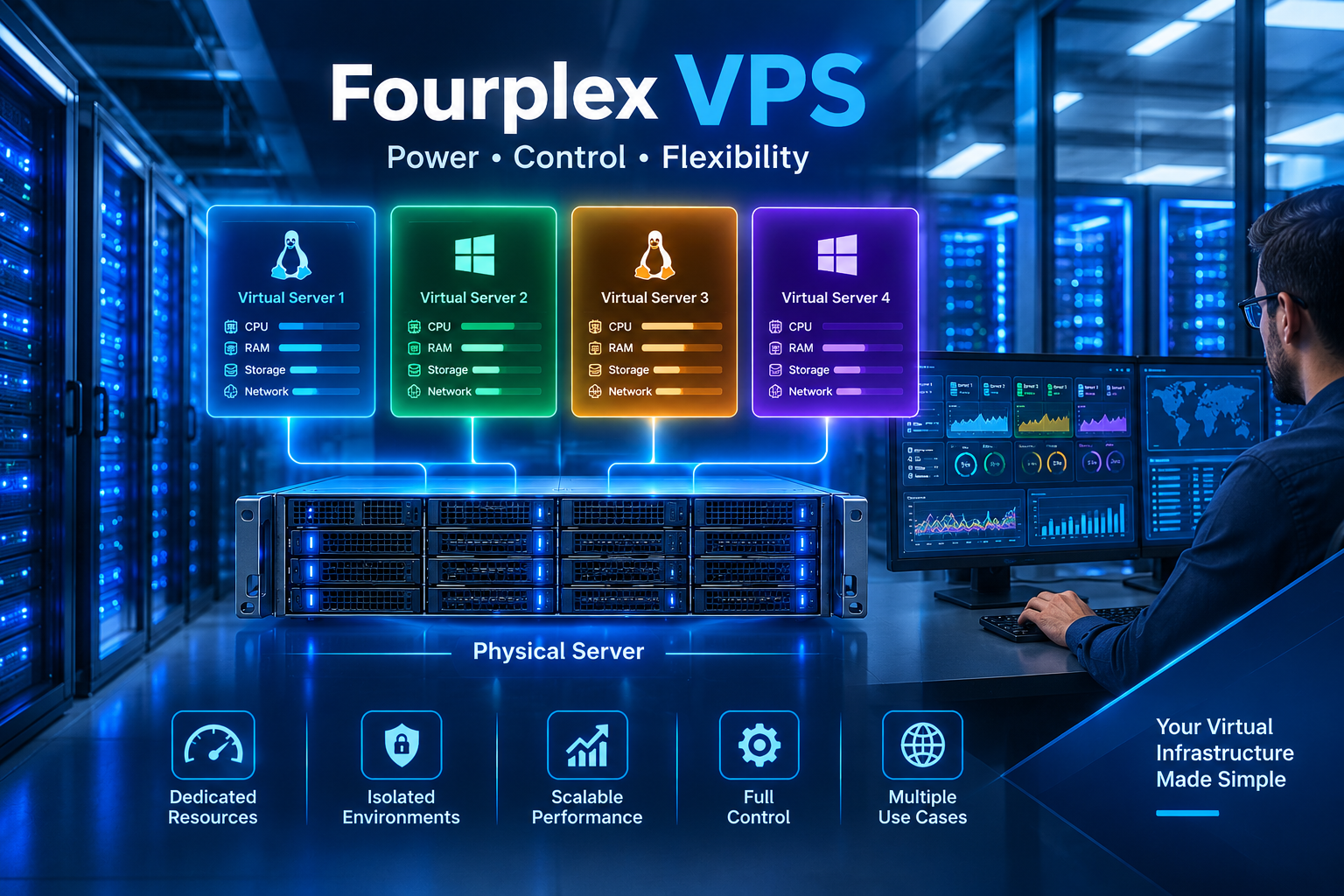
Virtual Private Server is formed through partitioning the hardware server into various virtual partitions. Each VPS runs independently using its own resources, operating system, and software.
For example, a VPS plan might provide:
- Multiple CPU cores
- Several gigabytes of RAM
- SSD or NVMe storage
- Dedicated or allocated IP addresses
- High network bandwidth
- Root or administrator access
- Linux or Windows operating system options
- Virtualization-based isolation
- Backup and monitoring options
The important point is that the name fourplex VPS alone should not be used to judge server performance. Always check the actual specifications provided by the hosting company.
How Does VPS Hosting Work?
To understand a fourplex VPS, it helps to understand the basic VPS architecture.
The physical computer in a data center has components such as processors, memory, storage, network cards, among others. The virtualization software enables the physical computer to be split into several virtual machines.
Every virtual machine is given some share of the physical machine’s resources.
For example:
Physical Server → Virtualization Layer → Multiple VPS Instances
Each VPS can have its own:
- Operating system
- Files
- Applications
- Database
- Website
- Security configuration
- Users
- Firewall rules
This provides more independence than traditional shared hosting.
With shared hosting, many websites may share the same hosting environment and resources. With VPS hosting, your virtual environment is isolated from other VPS instances.
Why Choose a Fourplex VPS?
There are several reasons someone might choose a fourplex VPS instead of basic shared hosting.
The first advantage is control.
Administrative privileges usually come with VPS hosting, which can enable users to install programs, set up services, tweak security settings, and control the server configuration.
The second benefit is the ability to scale up.
When your site or application becomes popular, you will have the possibility of upgrading the CPU, RAM, disk space, or bandwidth without changing your entire hosting environment.
Isolation is another key benefit of VPS hosting.
A malfunctioning application running on another VPS on the same machine will not affect your virtual server as it does in traditional shared hosting environments.
Benefits of a Fourplex VPS
1. Better Resource Allocation
One of the biggest benefits of VPS hosting is resource allocation.
A VPS plan typically specifies how much CPU, RAM, storage, and bandwidth is available to the customer. This makes it easier to understand the expected capacity of the hosting environment.
For websites receiving regular traffic, predictable resources can be useful.
2. Greater Server Control
A VPS gives you more control than standard shared hosting.
Depending on the provider and plan, you may have root or administrator access. This allows you to configure:
- Web servers
- PHP versions
- Databases
- Security software
- Monitoring tools
- Caching systems
- Control panels
- Custom applications
This flexibility is particularly useful for developers and experienced website administrators.
3. Improved Website Performance
There are various components that contribute to performance such as hardware, software settings, website code, database queries, cache, and traffic. Nonetheless, a well-configured VPS is able to offer better conditions than basic shared hosting.
The use of SSD/NVMe storage, adequate memory, fast CPUs, and optimized software greatly contributes to better application performance.
4. Better Isolation
The Virtual Private Server hosting is created to ensure isolation between virtual servers.
Thus, the effect of other people’s actions can be less noticeable in comparison with usual shared hosting.
Isolation is particularly significant for those companies who need more control over their server system.
5. Scalability
One reason businesses move to VPS hosting is the ability to scale.
If your website begins receiving more visitors, you may need:
- More RAM
- More CPU cores
- Additional storage
- Higher bandwidth
- Better network performance
Many VPS providers allow customers to upgrade their plans as requirements increase.
6. Root or Administrator Access
Advanced users require access to the server.
Root permissions in Linux and administrative permissions in Windows allow users to set up and configure applications not offered by standard shared hosting accounts.
This freedom also means that users are responsible for proper server management.
7. Multiple Hosting Options
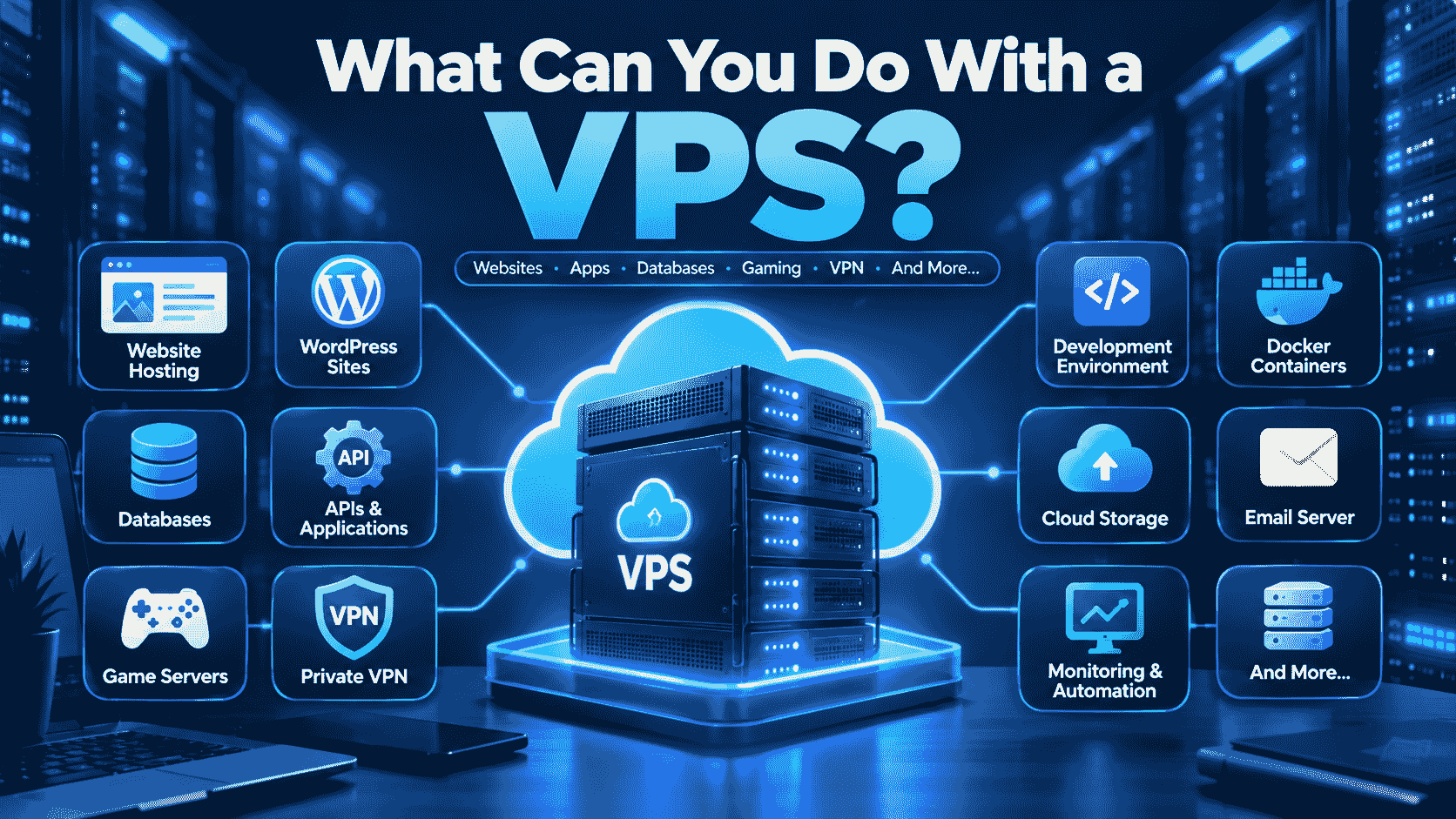
A VPS can be used for many different projects.
For example, you could host:
- Business websites
- E-commerce stores
- WordPress websites
- Web applications
- APIs
- Databases
- Development environments
- Testing servers
- Private applications
- Small SaaS platforms
The best use depends on the resources and configuration of the VPS.

Fourplex VPS vs Shared Hosting
Before selecting a fourplex VPS, it is useful to compare VPS hosting with shared hosting.
Shared hosting is usually designed for beginners and smaller websites. It is affordable and easy to manage, but users generally have limited server-level control.
VPS hosting provides greater flexibility and more resources.
| Feature | Shared Hosting | VPS Hosting |
| Server Control | Limited | High |
| Root Access | Usually No | Often Yes |
| Resource Allocation | Shared | Allocated |
| Custom Software | Limited | Flexible |
| Scalability | Limited | Better |
| Performance | Variable | More Predictable |
| Technical Knowledge | Low | Moderate/High |
| Custom Configuration | Limited | Extensive |
If you only need a simple personal website, shared hosting may be enough.
If you operate several websites, applications, or resource-intensive services, a VPS may provide a more suitable environment.
Fourplex VPS vs Dedicated Server
The dedicated server allows the use of a whole computer by a single client.
On the contrary, the VPS offers virtualization to create a virtual server inside the physical host server.
In contrast, dedicated servers allow maximum hardware access and efficiency, though they are often costly.
A fourplex VPS may be more appropriate for users who need better performance and control without requiring an entire physical server.
VPS Advantages
- Lower cost
- Easy scalability
- Virtual isolation
- Flexible configurations
- Faster deployment
- Suitable for many applications
Dedicated Server Advantages
- Entire physical server
- Maximum hardware resources
- Full hardware control
- Suitable for extremely demanding workloads
For small and medium businesses, a VPS can provide a practical balance between performance and cost.
What Can You Host on a Fourplex VPS?
One of the biggest advantages of VPS hosting is versatility.
WordPress Websites
A VPS can host WordPress websites that have outgrown basic shared hosting.
With server-level access, administrators can optimize:
- PHP
- MySQL or MariaDB
- Nginx
- Apache
- Object caching
- Database performance
- Server security
This can be particularly useful for websites with increasing traffic.
E-Commerce Websites
Online stores often require more resources than simple informational websites.
An e-commerce website may need additional processing power for:
- Product searches
- Shopping carts
- Customer accounts
- Payment processing
- Inventory systems
- Database queries
A properly configured VPS can provide a stronger hosting environment for these workloads.
Web Applications
Developers can use VPS servers to deploy custom web applications.
Examples include:
- Customer dashboards
- SaaS applications
- Booking systems
- Business management tools
- APIs
- Internal applications
Because VPS environments provide more control, developers can install the software stack required by their application.
Development and Testing
A VPS can also function as a remote development environment.
Developers can create separate environments for:
- Development
- Testing
- Staging
- Production
This allows teams to test updates before deploying them to a live website.
Important Fourplex VPS Features to Check
When choosing a VPS provider, do not select a plan based only on its name.
Instead, examine the actual specifications.
CPU
CPU determines how much processing power your VPS has.
For basic websites, fewer CPU cores may be sufficient.
More demanding applications may require multiple CPU cores.
Look for information about:
- CPU cores
- CPU generation
- Dedicated vs shared CPU resources
- CPU frequency
- Virtualization technology
RAM
RAM is another important factor.
A website with multiple applications, databases, caching systems, and background processes can consume significant memory.
Insufficient RAM may cause performance problems.
For example:
2 GB RAM: Small websites and lightweight applications
4 GB RAM: Medium websites and applications
8 GB+ RAM: Larger applications and multiple services
These are general examples, not universal requirements.
Storage
Storage affects both capacity and performance.
Modern VPS providers may offer:
- SSD
- NVMe SSD
- HDD
NVMe storage is generally faster than traditional HDD storage and can provide strong performance for databases and applications that perform frequent disk operations.
Bandwidth
Bandwidth determines how much data your server can transfer.
If your website has many visitors, large images, videos, downloads, or API traffic, bandwidth becomes increasingly important.
Always check:
- Monthly bandwidth
- Network speed
- Traffic limits
- Port speed
- Additional bandwidth costs
Operating System
Most VPS providers offer Linux distributions such as:
- Ubuntu
- Debian
- AlmaLinux
- Rocky Linux
- CentOS alternatives
Some providers also offer Windows Server.
Choose the operating system that matches your technical requirements.
Security Considerations for a Fourplex VPS
Having a VPS does not automatically make your website secure.
You still need to configure the server correctly.
Use Strong Passwords
Never use simple passwords for root, administrator, database, or control panel accounts.
Use long and unique passwords.
Enable SSH Security
For Linux VPS servers, administrators should consider securing SSH access.
Possible measures include:
- SSH keys
- Changing default configurations
- Limiting login access
- Disabling unnecessary authentication methods
- Using firewall rules
Install a Firewall
A firewall can help control network traffic entering and leaving the VPS.
Only necessary ports should generally be exposed.
Keep Software Updated
Outdated software can introduce security risks.
Regularly update:
- Operating system packages
- Web servers
- Databases
- PHP
- Control panels
- Applications
- Security tools
Create Backups
Never rely on the VPS itself as the only copy of your data.
Maintain separate backups whenever possible.
A useful backup strategy can include:
Server → Local/Remote Backup → Off-site Backup

How to Choose the Right Fourplex VPS
Choosing the right VPS starts with understanding your workload.
Ask yourself:
How many websites will I host?
If you are hosting one small website, you may not need a powerful server.
If you plan to host multiple websites, you will need more CPU, RAM, storage, and bandwidth.
What software will I run?
Applications will also need different things.
A light-weighted website would probably need fewer resources, whereas a data-intensive application could possibly need a lot more.
How much traffic do I expect?
Traffic is another important consideration.
Estimate:
- Monthly visitors
- Peak traffic
- Concurrent users
- File downloads
- API requests
Do I need root access?
Developers and advanced administrators may require root access.
If you do not want to manage the operating system yourself, a managed VPS may be a better option.
Managed vs Unmanaged Fourplex VPS
VPS hosting can generally be divided into managed and unmanaged services.
Managed VPS
With managed VPS hosting, the provider helps with server administration.
Depending on the plan, support may include:
- Operating system updates
- Security configuration
- Server monitoring
- Backup management
- Technical support
- Performance optimization
Managed VPS hosting is useful for users who want VPS resources without handling every server administration task themselves.
Unmanaged VPS
With unmanaged VPS hosting, you are generally responsible for managing the server.
This may include:
- Installing software
- Configuring the firewall
- Updating the operating system
- Managing users
- Monitoring resources
- Troubleshooting services
- Creating backups
Unmanaged VPS plans can be suitable for experienced users and developers.
Fourplex VPS for Businesses
Most businesses require hosting services that allow for growth.
Not only does a business site need to be fast, but it needs to be reliable and secure as well.
VPSs allow more control when it comes to hosting a business’s websites and apps.
For instance, one environment of a VPS can host a website while another can host an app depending on what resources are available.
Businesses should take into consideration:
- Uptime guarantees
- Backup policies
- Data center locations
- Customer support
- Security features
- Scalability
- Network quality
- Disaster recovery
The cheapest VPS is not always the best choice for a business-critical application.
Fourplex VPS for Developers
Developers can benefit significantly from VPS hosting.
A VPS can provide a remote Linux environment where developers can install their preferred tools and frameworks.
Depending on the application, developers may deploy:
- Node.js
- Python
- PHP
- Java
- Docker
- Nginx
- Apache
- MySQL
- PostgreSQL
- Redis
A VPS can also be used for staging environments before software is deployed to production.
Monitoring a Fourplex VPS
Server monitoring is important because performance problems are easier to solve when you identify them early.
Monitor:
CPU Usage
High CPU usage for extended periods may indicate that your application requires optimization or additional resources.
RAM Usage
If available memory consistently stays low, consider optimizing applications or upgrading the VPS.
Disk Usage
Running out of storage can cause serious application problems.
Keep an eye on:
- Database size
- Log files
- Backups
- Temporary files
- Application data
Network Usage
Monitoring network traffic can help identify unexpected traffic spikes or application problems.
Scaling Your Fourplex VPS
As your website grows, your VPS requirements may increase.
Vertical scaling means increasing the resources of the existing VPS.
For example:
4 GB RAM → 8 GB RAM
or
2 CPU cores → 4 CPU cores
You can also scale up storage or bandwidth.
If you have a big application, then scaling horizontally can include more than one server and workload balancing.
This is because your scaling strategy needs to be appropriate for your application architecture.
Common Mistakes to Avoid
When using a fourplex VPS, avoid these common mistakes.
Choosing Based Only on Price
A cheap VPS may look attractive, but it may have limited resources, poor support, or network restrictions.
Ignoring Backups
Hardware failure, accidental deletion, software problems, or security incidents can result in data loss.
Using Weak Passwords
Strong authentication is essential for server security.
Installing Too Many Services
Unnecessary applications consume resources and can increase security risks.
Ignoring Updates
Outdated software can cause compatibility and security issues.
Not Monitoring Resources
Without monitoring, you may not know why your website is becoming slow.
Is a Fourplex VPS Right for You?
A fourplex VPS may be suitable if you need more control and flexibility than shared hosting provides.
It can be useful for:
- Website owners
- Developers
- Agencies
- Small businesses
- E-commerce stores
- Application developers
- SaaS projects
- Testing environments
- Multiple websites
However, the right choice depends on the actual resources and features included in the plan.
Before purchasing, compare CPU, RAM, storage, bandwidth, virtualization, operating system options, backups, support, and scalability.

Frequently Asked Questions About Fourplex VPS
What is a fourplex VPS?
A fourplex VPS generally refers to a VPS-related configuration involving multiple virtualized environments or workloads. The exact meaning depends on the hosting provider, so customers should check the provider’s specifications before purchasing.
Is a fourplex VPS better than shared hosting?
It can be, especially for users who need more control, predictable resources, and server customization. However, shared hosting can still be sufficient for smaller websites.
Can I host WordPress on a fourplex VPS?
Yes. A VPS can host WordPress and can provide more control over PHP, databases, web servers, caching, and security configurations.
Is VPS hosting secure?
VPS hosting provides isolation, but security still depends on proper configuration. Firewalls, strong authentication, updates, monitoring, and backups are important.
Do I need technical knowledge to use a VPS?
It depends on whether the VPS is managed or unmanaged. Managed VPS hosting can reduce the amount of server administration required.
Can I upgrade my VPS later?
Many providers allow customers to upgrade resources such as CPU, RAM, storage, and bandwidth. Check the provider’s upgrade policy before purchasing.
Is a fourplex VPS suitable for businesses?
It can be suitable for businesses that need more control and resources than shared hosting provides. Business-critical workloads should also consider backups, uptime, security, support, and scalability.
Final Thoughts
A fourplex VPS can be an attractive hosting solution for users who need more flexibility, control, and resources than traditional shared hosting can provide. VPS technology allows a physical server to host multiple isolated virtual environments, giving customers an independent environment for websites, applications, databases, and development projects.
However, before choosing one of them, pay more attention to the specific specifications rather than the names of the products. The CPU, RAM, hard drive space, bandwidth, network speed, virtualization technology, backup services, security, support, and scalability all matter.
The managed VPS will be easier for beginners to use. The unmanaged VPS will appeal to professional developers and administrators, as it allows greater control.
In conclusion, the best fourplex VPS is always a matter of personal preference depending on the workload, budget, skills, and future expansion needs.
2 thoughts on “Fourplex VPS: Complete Guide to Understanding and Choosing the Right VPS Solution”