









Introduction
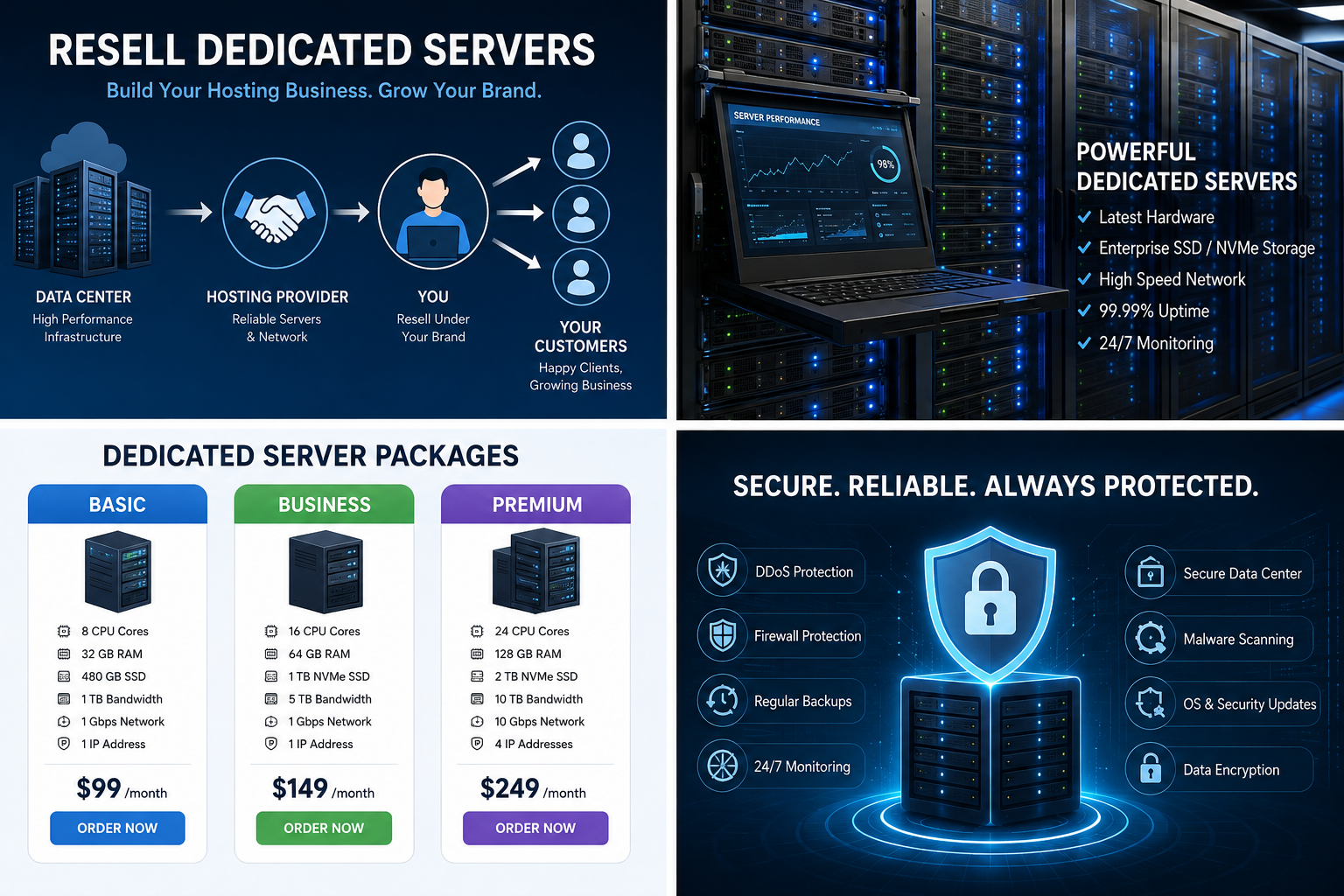
Web hosting remains a growing business as enterprises and individuals require reliable hosting services to run their websites and applications. Reselling dedicated servers is a potential revenue stream for web hosts and digital agencies.
When you resell dedicated servers, you acquire the dedicated servers from an infrastructure provider and provide the service to your clients under your company name. You do not have to deal with the issues involved in establishing the entire data center. All you need is to market and grow your hosting business.
With dedicated hosting, users will have more power, control, speed, security, and resources as compared to shared hosting. Dedicated hosting may prove to be essential for customers who have websites, applications, databases, and e-commerce sites that receive high traffic.
This guide is going to shed light on the definition, process, benefits, key features, pricing, and ways to develop a successful dedicated server reselling business.
What Does It Mean to Resell Dedicated Servers?
To resell dedicated servers means offering dedicated server hosting services to customers without necessarily owning and maintaining the physical infrastructure yourself.
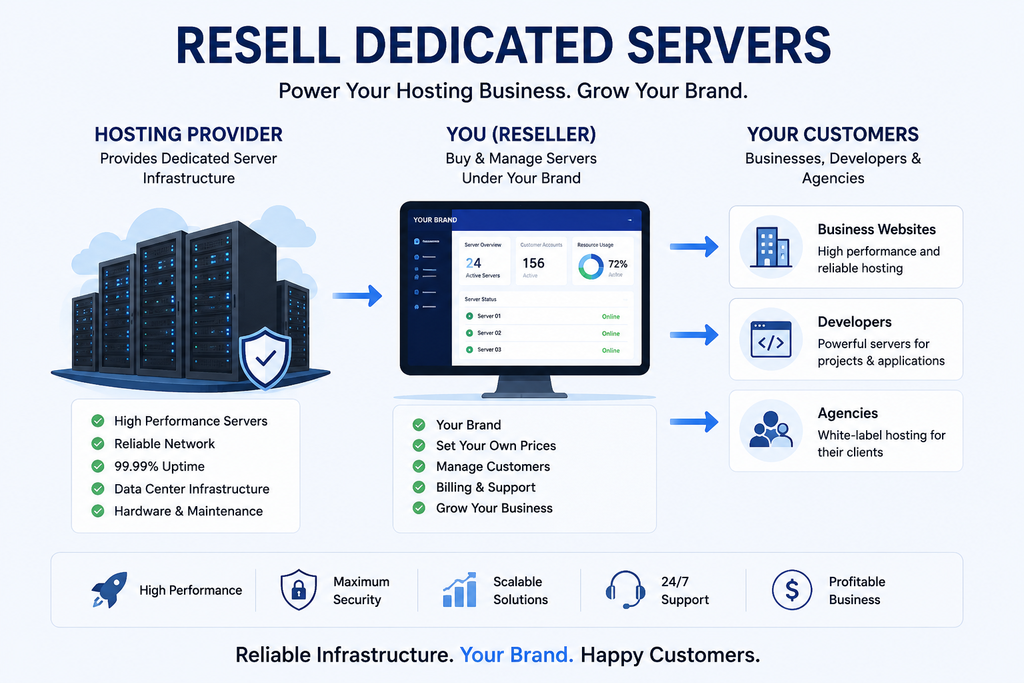
A typical reseller deals with a dedicated server company or data center. The company provides all the hardware, the connection, the power, cooling, security, and all the facilities of the data center. The reseller buys or rents server resources and offers hosting services to customers.
For instance, think that you run a web design agency. You have some customers who require more resources than those of a shared hosting package can offer. Rather than referring them elsewhere for their hosting needs, you can create your own hosting packages using your own brand name.
The basic business model looks like this:
Data Center → Hosting Provider → Reseller → End Customer
The reseller will have the power to control customer interaction while leaning on the infrastructure provider for the physical server environment.
In accordance with the provider you are using and the business model, you will be able to configure the servers, operating systems, control panel, IPs, bandwidth, and backup options.
How Does Dedicated Server Reselling Work?
The process of reselling dedicated servers generally involves several stages.
1. Choose a Dedicated Server Provider
The first thing is locating a reliable vendor who will provide a suitable dedicated server environment. In this case, you need to consider hardware, networks, availability, support, data centers, security, and cost.
2. Select Your Server Configuration
Choose server specifications based on your target customers. Common specifications include:
- CPU cores
- RAM
- SSD or NVMe storage
- HDD storage
- Bandwidth
- Network speed
- IPv4 or IPv6 addresses
- Operating system
- Backup options
- Server management
3. Create Your Hosting Packages
You can create different packages for different customer requirements. For example:
- Entry Dedicated
- Business Dedicated
- Premium Dedicated
- High-Performance Dedicated
Each package can have different CPU, RAM, storage, bandwidth, backup, and support limits.
4. Add Your Branding
Branding is an important part of the reseller model. Customers should interact with your company rather than necessarily seeing the infrastructure provider’s branding.
You can use your own:
- Company name
- Logo
- Website
- Customer portal
- Billing system
- Support email
- Pricing
- Terms of service
5. Market Your Services
Once your packages are ready, you need to attract customers through SEO, paid advertising, content marketing, social media, partnerships, and direct outreach.
6. Manage Customers
Customer management includes:
- Account setup
- Billing
- Renewals
- Technical support
- Server monitoring
- Upgrades
- Backups
- Security management
Your responsibilities depend on whether you sell unmanaged or managed dedicated server services.
Why Resell Dedicated Servers?
There are several reasons entrepreneurs and hosting companies choose to resell dedicated servers.
Lower Infrastructure Investment
Creating a data center on your own entails great expenses. You will require servers, networking hardware, electricity supply, cooling system, security system, personnel, and even a backup system.
Reselling lets you rely on an already existing service provider’s infrastructure.
Faster Business Launch
Setting up a reseller business may take place significantly sooner than setting up one’s own data center.
One can focus only on setting up one’s website, pricing packages, marketing plan, and customer service process.
Scalable Business Model
Your server infrastructure can grow as your customer base expands. You might begin by having just a few servers initially and increasing that infrastructure later on.
Branding Opportunities
Resellers can create their own brand for hosting services. The customer can buy the service from you while you handle the customer management aspect.
Recurring Revenue
The hosting service is usually offered to the clients on a subscription basis for either a month or a year.
Benefits of Dedicated Servers for Your Customers
Understanding customer benefits will help you create better reseller packages.
Dedicated Resources
Unlike shared hosting, dedicated servers provide resources that are assigned to one customer. This can help improve performance consistency.
Better Performance
Customers with resource-intensive websites and applications can benefit from dedicated CPU, RAM, storage, and network resources.
More Control
Dedicated server customers normally have better access to their server environment because they can pick an operating system for their server, install software on their server, etc.
Improved Security Isolation
Because the physical server is dedicated to a customer, there is greater resource and environment isolation compared with shared hosting.
Suitable for High-Traffic Websites
Websites that receive significant traffic may require more resources than typical shared hosting plans can provide.
Flexible Configuration
Dedicated servers can be configured for different workloads, including:
- Web hosting
- Databases
- eCommerce
- Game servers
- Business applications
- Development environments
- Virtualization
- Media processing

Resell Dedicated Servers vs. Shared Hosting Reselling
Dedicated Server Resale vs Shared Hosting Resale – Two Different Models of Business.
In shared hosting, several clients can be placed on the same physical server. This makes shared hosting cheap and ideal for small websites.
Dedicated hosting provides a complete physical server to a customer.
| Feature | Shared Hosting | Dedicated Hosting |
| Resource sharing | Yes | No |
| Performance | Moderate | High |
| Customization | Limited | Extensive |
| Isolation | Lower | Higher |
| Price | Lower | Higher |
| Target customers | Small websites | Businesses and demanding applications |
| Server control | Limited | Greater |
| Resource availability | Shared | Dedicated |
If your target market includes businesses, agencies, developers, and resource-intensive applications, dedicated hosting can provide a higher-value service.
Managed vs. Unmanaged Dedicated Servers
When you resell dedicated servers, one important decision is whether to provide managed or unmanaged services.
Managed Dedicated Servers
With managed hosting, your company or infrastructure provider may handle tasks such as:
- Operating system updates
- Security configuration
- Server monitoring
- Software installation
- Backup management
- Troubleshooting
- Performance optimization
Managed services can justify higher prices because customers receive more technical assistance.
Unmanaged Dedicated Servers
Unmanaged servers generally provide customers with more responsibility. The customer may need to handle:
- Server configuration
- Software installation
- Security updates
- Application management
- Troubleshooting
Unmanaged servers can be cheaper and are often suitable for experienced developers and system administrators.
Important Features to Consider
Choosing the right infrastructure is critical when you resell dedicated servers.
CPU
The processor determines how effectively a server handles workloads.
Consider:
- Number of cores
- Clock speed
- CPU generation
- Single-core performance
- Multi-core performance
Different customers have different CPU requirements, so offering multiple configurations can be useful.
RAM
RAM affects how many applications and processes a server can handle simultaneously.
Web applications, databases, virtualization, and large workloads may require substantial memory.
Storage
Storage type has a major impact on performance.
Common options include:
- HDD
- SATA SSD
- NVMe SSD
NVMe storage can provide significantly faster data access than traditional hard drives, making it useful for databases and performance-sensitive applications.
Bandwidth
Resale Dedicated Server vs Resale Shared Hosting – Two Types of Businesses.
Several clients can reside on one physical server in shared hosting. That is why shared hosting is affordable and suitable for small sites.
Network Speed
A 1 Gbps connection may be sufficient for many businesses, while higher-speed network connections can support more demanding workloads.
Data Center Location
Location can influence latency and performance.
If you target customers who are mostly in Europe, for instance, using a data center in Europe might provide better network latency for those users.
How to Choose a Reliable Provider
Your reseller business is strongly connected to the quality of your infrastructure provider.
Before choosing a provider, evaluate the following factors.
Uptime
Look for providers with a strong history of network and infrastructure reliability.
Network Quality
A powerful server is not enough if the network is unreliable. Check network capacity, redundancy, routing, and connectivity.
Hardware Quality
Look for modern CPUs, reliable memory, enterprise-grade storage, and quality networking equipment.
Support
Technical support can become critical when a server experiences an outage or hardware problem.
Check:
- Support hours
- Response time
- Support channels
- Technical expertise
- Emergency support
Data Center Security
Data centers should have appropriate physical and network security measures.
Backup Options
Backups can protect customer data from accidental deletion, software problems, hardware failures, or other incidents.
Pricing
Compare the total cost rather than looking only at the advertised monthly price.
Pricing Your Reseller Dedicated Server Packages
Pricing is one of the most important parts of the business.
For example, suppose you have monthly costs for infrastructure equal to $150. You could charge $220, $250, or anything else you like based on your costs and services.
Your pricing needs to account for:
- Server cost
- Licenses
- Backups
- IP addresses
- Payment processing
- Support
- Monitoring
- Marketing
- Taxes
- Business expenses
- Profit margin
Don’t compete solely based on price. While a low-cost hosting plan may draw in customers, good service, reliability, security, and performance could build your business even further.
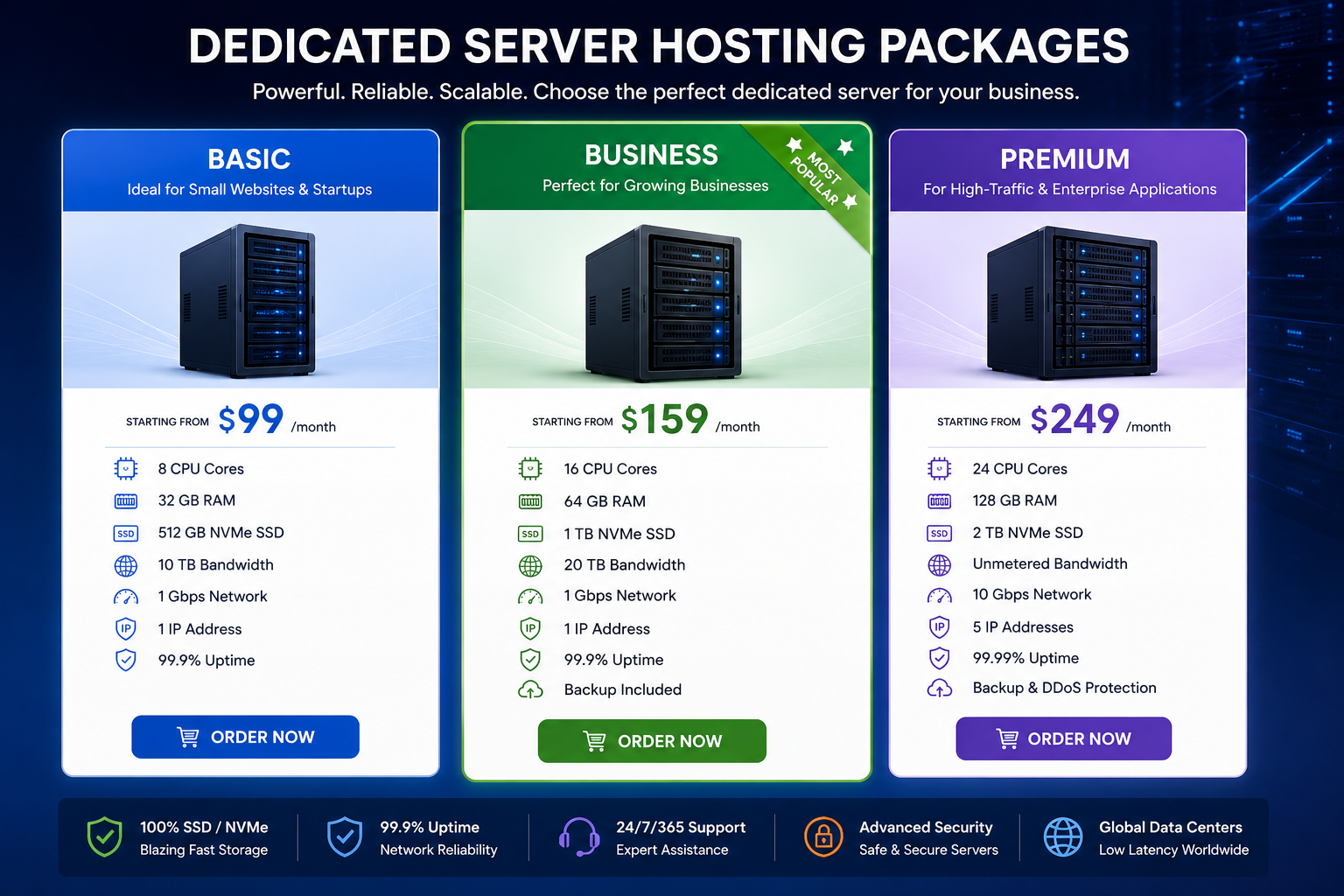
Building Different Hosting Packages
A tiered pricing model can make your services easier to sell.
Basic Dedicated Server
Suitable for:
- Small businesses
- Growing websites
- Developers
- Agencies
Possible configuration:
- 8 CPU cores
- 32 GB RAM
- SSD storage
- 1 Gbps network
- Basic monitoring
Business Dedicated Server
Suitable for:
- eCommerce websites
- Medium businesses
- SaaS applications
- High-traffic websites
Possible configuration:
- 12–16 CPU cores
- 64 GB RAM
- NVMe storage
- High bandwidth
- Automated backups
Premium Dedicated Server
Suitable for:
- Large applications
- Enterprise workloads
- High-traffic platforms
- Databases
Possible configuration:
- High-core-count CPU
- 128 GB+ RAM
- Enterprise NVMe
- High-speed networking
- Advanced monitoring
- Managed support
The exact specifications should depend on your provider and target market.
Who Should Resell Dedicated Servers?
This business model can be suitable for several types of companies.
Web Development Agencies
Web development agencies can add hosting to their existing services and create recurring revenue.
Digital Marketing Agencies
Marketing agencies can provide hosting alongside SEO, website development, and digital marketing services.
IT Companies
IT service providers can include dedicated infrastructure as part of their managed technology solutions.
Hosting Entrepreneurs
Entrepreneurs can build a specialized hosting company without operating their own data center.
Freelancers
Experienced freelancers can offer premium hosting to clients who need reliable infrastructure.
Software Companies
Software providers can use dedicated infrastructure packages for customers running resource-intensive applications.
How to Market Your Dedicated Server Business
Having excellent servers does not automatically generate customers. You also need an effective marketing strategy.
Search Engine Optimization
SEO can help your website appear when potential customers search for hosting services.
Create content around topics such as:
- Dedicated server hosting
- Managed dedicated servers
- High-performance servers
- NVMe dedicated servers
- Dedicated servers for businesses
- Server security
- Dedicated vs VPS hosting
Create dedicated landing pages for each important service.
Content Marketing
Publish useful guides that answer customer questions.
Examples include:
- How to choose a dedicated server
- Dedicated server vs VPS
- How much RAM does a server need?
- What is NVMe hosting?
- How to secure a dedicated server
Social Media Marketing
Share educational content, product updates, case studies, and technical tips on relevant social platforms.
Partnerships
You can partner with:
- Web developers
- SEO agencies
- Software companies
- IT consultants
- Digital agencies
Referral partnerships can help you acquire customers without relying entirely on paid advertising.
SEO Strategy for a Dedicated Server Reseller
If your goal is to rank organically, focus on search intent rather than keyword stuffing.
Your main service page can target the focus keyword:
resell dedicated servers
Supporting keywords can include:
- dedicated server reseller
- dedicated server hosting reseller
- reseller dedicated hosting
- dedicated server reseller program
- managed dedicated server reseller
- dedicated hosting business
- dedicated server hosting
- high-performance dedicated servers
- enterprise dedicated servers
- server reseller hosting
Use the primary keyword naturally in the title, introduction, headings, body content, image alt text where appropriate, and meta description.
Do not force the keyword into every paragraph. Search engines increasingly evaluate overall topic relevance and content quality.
Technical SEO for Your Hosting Website
Your website should also have a strong technical foundation.
Important areas include:
Page Speed
Fast-loading pages provide a better user experience.
Mobile Optimization
Your hosting website should work properly on smartphones and tablets.
Internal Linking
Link related pages together. For example:
Dedicated Servers → Managed Dedicated Servers → Server Backup → Server Security
Schema Markup
Use relevant structured data where appropriate to help search engines understand your pages.
Clear URLs
Keep URLs simple and descriptive.
Secure Website
Use HTTPS across your entire website.
Customer Support Is Critical
When you resell dedicated servers, customer support can become one of your biggest competitive advantages.
Customers may need assistance with:
- Server setup
- DNS configuration
- Operating system installation
- Firewall configuration
- Software installation
- Backup restoration
- Performance issues
- Network problems
You can provide support through:
- Ticket systems
- Live chat
- Knowledge bases
- Documentation
If you offer managed services, clearly explain what your support team handles and what falls outside the service scope.
Security Considerations
Security should be a core part of your dedicated hosting business.
Important practices include:
- Strong passwords
- SSH key authentication
- Firewall configuration
- Regular software updates
- Malware monitoring
- Secure backups
- Access control
- Server monitoring
- DDoS protection where available
- Regular security reviews
You should also create clear security responsibilities between your company, infrastructure provider, and customers.

Backup and Disaster Recovery
Backups are essential for customers running important websites and applications.
A good backup strategy may include:
- Daily backups
- Weekly backups
- Off-site backups
- Multiple backup copies
- Automated backup verification
- Disaster recovery procedures
Remember that RAID is not a complete backup solution. RAID can improve storage redundancy, but it does not replace independent backups.
Scaling Your Reseller Business
One advantage of a reseller model is that you can grow gradually.
You can start with a small customer base and expand your infrastructure as demand increases.
Possible growth stages include:
Stage 1: Launch your website and first hosting packages.
Stage 2: Acquire your first customers.
Stage 3: Introduce managed services.
Stage 4: Add additional server configurations.
Stage 5: Expand into additional data center locations.
Stage 6: Create enterprise hosting packages.
Stage 7: Build partnerships and reseller channels.
The goal should be sustainable growth rather than simply acquiring as many customers as possible.
Common Mistakes to Avoid
New hosting businesses can make several mistakes.
Choosing Only the Cheapest Provider
Cheap infrastructure can create problems if uptime, hardware quality, or support is poor.
Overpromising Support
Do not advertise 24/7 technical support unless you can actually provide it.
Ignoring Backups
A customer data loss incident can seriously damage your reputation.
Selling Without Monitoring
You need systems to identify server problems before customers report them.
Using Complicated Pricing
Customers should easily understand what each package includes.
Targeting Everyone
Choose a specific target market instead of trying to serve every possible customer.
For example, you might specialize in hosting for agencies, eCommerce businesses, SaaS companies, or developers.
Frequently Asked Questions
What does it mean to resell dedicated servers?
It implies buying or leasing server infrastructure from a service provider and selling it to customers in the form of hosting services.
Is reselling dedicated servers profitable?
The enterprise can be profitable when the infrastructure cost, support cost, marketing cost, and client pricing are properly managed. Profitability is largely dependent on your target audience and the services you provide.
Do I need my own data center?
No. A reseller can use servers and data center infrastructure provided by an established hosting company.
Can I use my own brand?
Many reseller arrangements allow you to build a customer-facing brand, but the exact branding options depend on the provider and contract.
Should I offer managed dedicated servers?
Managed hosting can be a good option if your target customers want technical assistance and are willing to pay for additional support.
What businesses need dedicated servers?
Companies that have websites receiving many hits on a daily basis, huge databases, resource-heavy software, e-commerce, SaaS software, and other special workload requirements might find dedicated servers useful for them.
Can agencies resell dedicated servers?
Yes. Web development, SEO, digital marketing, and IT agencies can add dedicated hosting to their service portfolios.
What should I look for in a dedicated server provider?
Consider uptime, hardware, network quality, support, data center locations, security, backups, scalability, and overall pricing.
Conclusion
Learning how to resell dedicated servers can provide an opportunity to build a recurring-revenue hosting business without the enormous investment required to operate your own data center.
The secret is selecting solid infrastructure, creating good hosting packages, offering good customer support, maintaining proper security and backups, and developing a marketing strategy.
Instead of trying to beat your competitors by lowering prices, try building your business on value. Good infrastructure, good customer support, reasonable prices, security, and dedicated hosting can help you get and keep clients.
Whatever kind of business you run — whether it’s freelance work, a web development company, an IT company, a digital marketing company, or a hosting business — you can use reselling dedicated servers as another way to add income.
Define your target audience, select appropriate infrastructure, create professional hosting packages, and grow step by step as you get more and more customers.