






What Is Debian VPS Hosting?
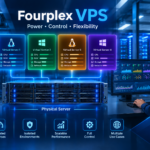
Debian VPS Hosting is a virtual private server that runs the Debian Linux operating system. It gives users dedicated virtual resources such as CPU, RAM, storage, and bandwidth while sharing the physical hardware with other VPS customers.
One of the most recognized Linux operating systems is Debian. Stability, security, software collection, and an extensive open-source community are some of the key features that make it the right choice for hosting websites, applications, development environments, databases, and business applications.
In contrast with conventional shared hosting, using a virtual private server allows you greater flexibility in managing and configuring the server environment and installing various applications and software.
Linux developers and system administrators can opt for the Debian VPS hosting solution.
How Does Debian VPS Hosting Work?
In order to get a clear idea about Debian VPS Hosting, one should know the basics of VPS hosting.
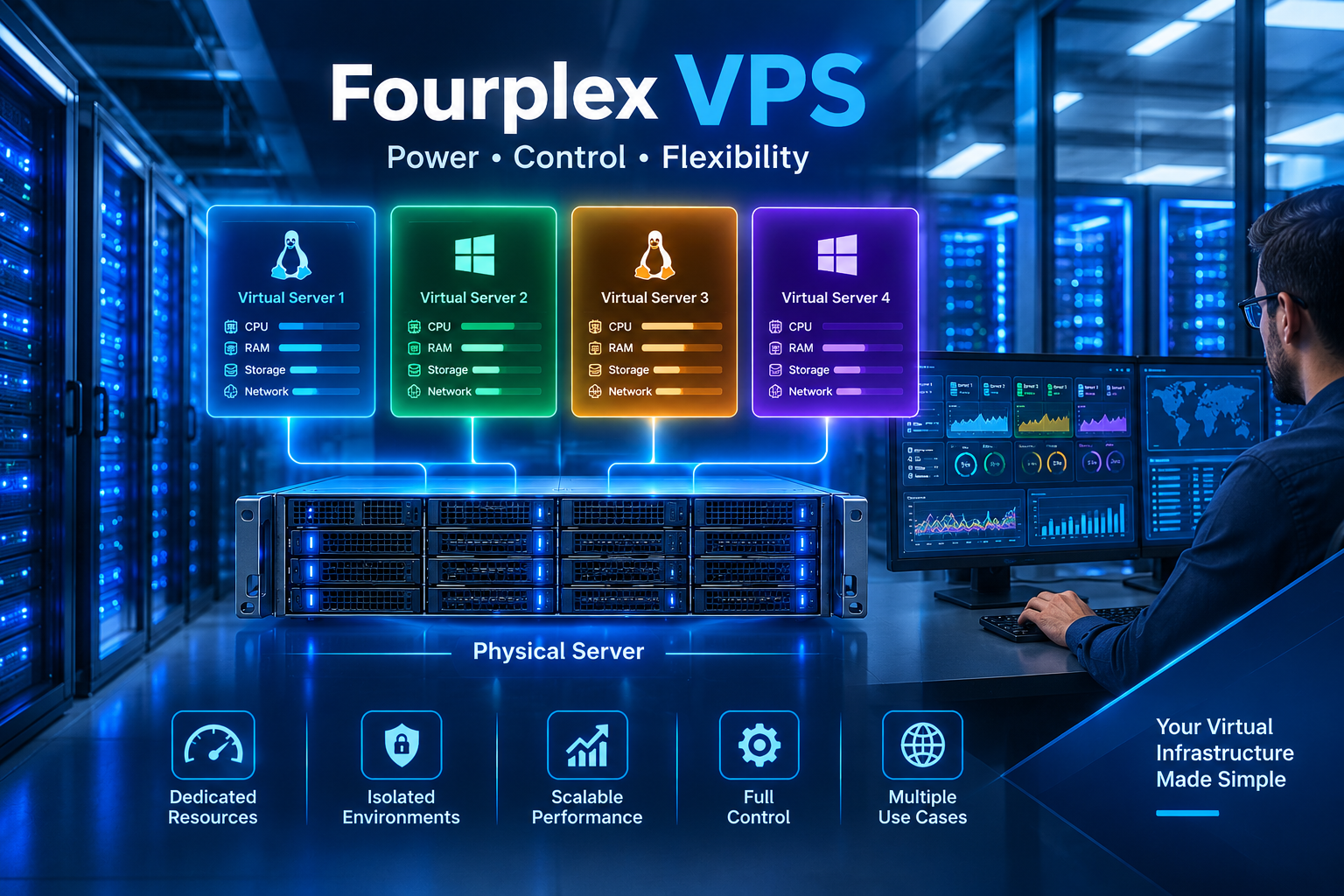
One can use virtualization technology to create several virtual servers out of a single physical server in the data center. These servers are separate from each other, work individually, and also run their own operating systems and applications.
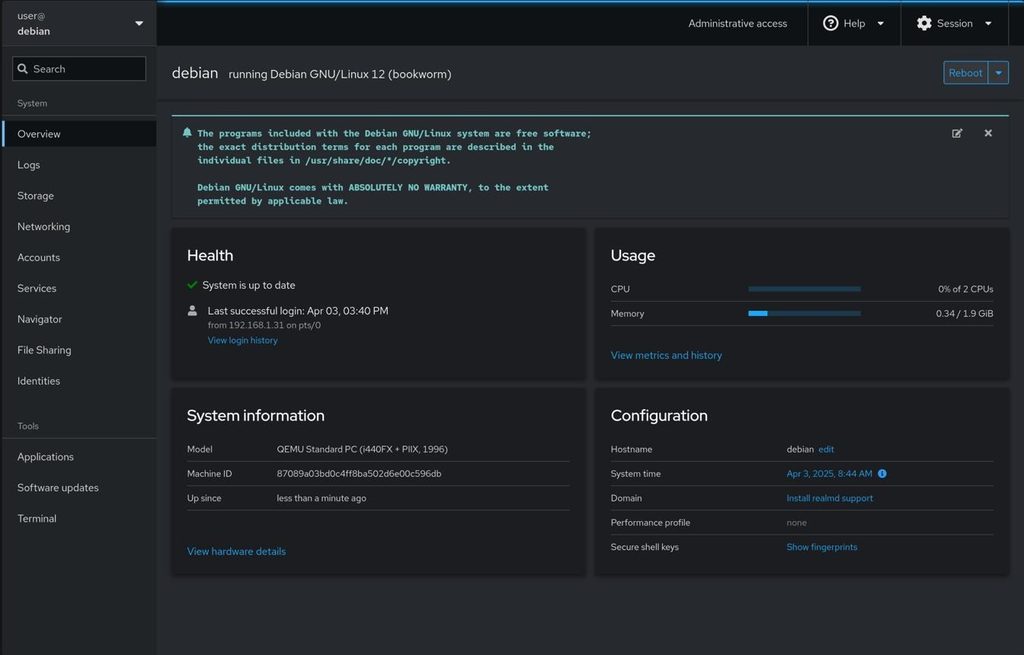
Debian operating system is installed on the VPS in the case of Debian VPS hosting.
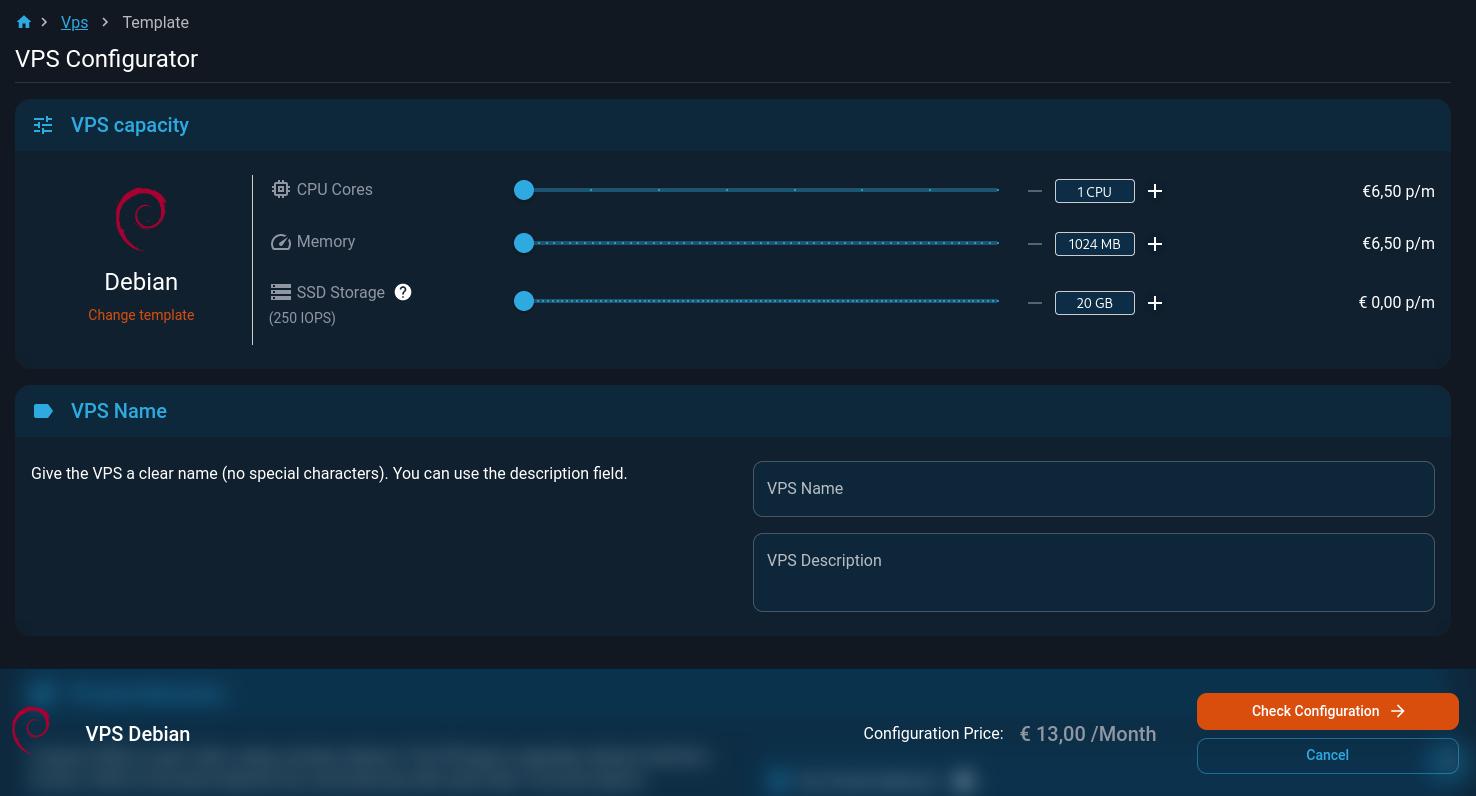
For example, a VPS plan may provide:
- 2 virtual CPU cores
- 4 GB RAM
- 80 GB SSD storage
- 2 TB monthly bandwidth
- A dedicated IP address
- Root access
- Debian Linux
Although several VPS environments can operate on the same physical machine, virtualization keeps their environments separated.
This gives you significantly more control than typical shared hosting.
Why Choose Debian for a VPS?
There are many Linux distributions that are suitable for installation on VPS servers, such as Ubuntu, AlmaLinux, Rocky Linux, and Debian.
Among these distributions, Debian OS has certain advantages, which are due to its stability and reliability.
This operating system has a rich history and numerous open-source communities. The packaging system of this operating system makes software installation and maintenance easier.
Some major reasons people choose Debian include:
1. Stability
Debian is famous for its stable software versions. This feature is essential when dealing with servers since websites and applications should be available round the clock.
With a stable system, the number of issues arising from software modifications could be avoided.
2. Security
Security is one of the vital components in server administration.
Debian offers security patches and other features that will help the administrator in securing his or her system. However, it is worth noting that even if you have a secure operating system, you must take other security measures.=
3. Lightweight Environment
Debian does not need a graphical environment to operate effectively.
The server generally does not require a graphical environment.
Running only the necessary services will free up more resources for websites and applications.
4. Open Source
Debian does not need a graphical environment to operate effectively.
The server generally does not require a graphical environment.
Running only the necessary services will free up more resources for websites and applications.
Key Features of Debian VPS Hosting
Different providers offer different features, but a good Debian VPS hosting plan commonly includes several important capabilities.
Root Access
Root access will allow you to have full control over your VPS.
You can install packages, create users, configure services, manipulate files, and change the settings of your server.
Root access is a very powerful feature, but you should use it wisely since wrong commands might harm the server or disable applications.
Dedicated Virtual Resources
A VPS typically provides dedicated CPU, RAM, storage, and bandwidth.
For example, a hosting provider may offer several plans:
| VPS Plan | CPU | RAM | Storage |
| Basic | 1–2 vCPU | 2 GB | 40 GB |
| Standard | 2–4 vCPU | 4 GB | 80 GB |
| Professional | 4–6 vCPU | 8 GB | 160 GB |
| Advanced | 6–8 vCPU | 16 GB | 320 GB |
The exact specifications depend on the hosting company.
SSD or NVMe Storage
The technology used to store data can influence server performance.
In terms of speed, HDD storage is usually slower than SSD storage. The NVMe type of storage may work even faster because it employs an interface that is made specifically for SSD drives.
The storage speed becomes important when one needs to deal with database systems, applications, and websites.
Flexible Software Installation
One of the major benefits of Debian VPS hosting is software flexibility.
Depending on your requirements, you can install software such as:
- Nginx
- Apache
- MySQL
- MariaDB
- PostgreSQL
- PHP
- Python
- Node.js
- Docker
- Git
- Redis
- WordPress
This flexibility makes Debian VPS useful for both simple websites and more advanced applications.
Debian VPS Hosting vs Shared Hosting
Shared Hosting and VPS hosting serve different needs.
Shared hosting involves multiple websites on the same hosting platform. This is because the service provider handles most of the server-level settings.
In the case of VPS, one gets access to their own virtual server environment.
| Feature | Shared Hosting | Debian VPS Hosting |
| Server control | Limited | High |
| Root access | Usually no | Usually yes |
| Resource allocation | Shared | Allocated |
| Software installation | Limited | Flexible |
| Scalability | Limited | Better |
| Technical knowledge | Low | Moderate to advanced |
| Custom configuration | Limited | Extensive |
If you only need a basic website, shared hosting may be easier.
If you need more control, customization, and resources, a Debian VPS may be a better option.
Benefits of Debian VPS Hosting
There are several advantages to using a Debian VPS.
Better Control
A VPS allows you to have control over server configuration settings.
You are free to choose which applications and services to use, as well as server configuration.
It comes in handy for developers who need a custom environment.
Improved Performance
Since VPS hosting involves allocated resources, the level of performance is usually more predictable than shared hosting.
In this regard, your website or application need not necessarily fight for the same resources as several hundred other websites.
Nevertheless, real performance is dependent on the hardware, virtualization technology, network, and configuration used by the provider.
Scalability
As your website continues to expand, you may need more memory, processing, storage, and bandwidth.
Most VPS hosts give customers the ability to upgrade their plans without switching their entire hosting setup.
This is why VPS hosting can be beneficial to expanding websites and applications.
Cost Efficiency
An exclusive physical server may cost too much.
VPS offers lots of features that physical servers offer at a relatively lower price, as the hardware will be shared among many virtual servers.
This is something that may be considered by startups, developers, small firms, and expanding websites.
Who Should Use Debian VPS Hosting?
Debian VPS hosting can be suitable for many different users.
Website Owners
If your website has outgrown shared hosting, a Debian VPS can provide additional resources and control.
It can be used for:
- WordPress websites
- Business websites
- Blogs
- Ecommerce websites
- Membership websites
- Web applications
Developers
Developers can create customized development and production environments.
For example, a developer can install a particular PHP, Python, Node.js, or database environment required by an application.
Businesses
Businesses can use VPS servers for internal tools, websites, databases, APIs, email-related services, and other applications.
A VPS can provide more flexibility than basic hosting.
Agencies
VPS servers are also used by web developers and search engine optimization companies to host several websites or applications.
But how many websites can be hosted on the VPS server is based on the resources of the server and the needs of each website.
Debian VPS Hosting for WordPress
WordPress is one of the most popular website platforms, and it can run on a Debian VPS.
A typical WordPress VPS environment may include:
- Debian Linux
- Nginx or Apache
- PHP
- MySQL or MariaDB
- SSL certificate
- WordPress
- Firewall
- Backup system

WordPress website running on Debian VPS hosting
The advantage of using a VPS for WordPress is that you can customize the server environment.
However, managing WordPress on a VPS requires more technical knowledge than using managed WordPress hosting.
Debian VPS Hosting for Web Applications
Modern applications often need specific server configurations.
For example, a developer may need:
- Node.js
- Python
- Docker
- PostgreSQL
- Redis
- Nginx
- Git
Debian is capable of offering a dynamic environment for deployment of these utilities.
A VPS can also be turned into a production server where software will be installed for end-users.
This allows using Debian VPS hosting by startups, software developers, SaaS solutions, and custom websites.
How to Secure a Debian VPS
Security should be one of your first priorities after deploying a VPS.
A newly created server should not simply be left with default settings.
Here are some important security practices.
Create a Non-Root User
Do not do all tasks using root permissions; rather, create an administrative user account and use privileges selectively.
This may minimize the chances of making harmful system modifications.
Use Strong Authentication
Use strong passwords and, where possible, SSH keys.
SSH keys can provide stronger authentication than simple passwords when properly configured.
Configure a Firewall
A firewall can control which network connections are allowed to reach your server.
Open only the ports needed by your applications.
For instance, an HTTP and HTTPS connection is common for a web server, whereas an SSH connection should be properly limited.
Keep Debian Updated
Updates are necessary to maintain security and stability.
Make sure you are aware of security updates and maintain your software packages.
Taking regular backups before any major changes is also essential.
Monitor Your Server
Monitoring can help identify problems such as:
- High CPU usage
- Memory exhaustion
- Disk space problems
- Network issues
- Unexpected traffic
- Service failures
Early detection can prevent small problems from becoming major outages.
How to Choose the Best Debian VPS Hosting Provider
Choosing a provider is just as important as choosing the operating system.
Here are several factors to consider.
CPU and RAM
Updates are necessary to maintain security and stability.
Make sure you are aware of security updates and maintain your software packages.
Taking regular backups before any major changes is also essential.
Storage Type
Consider SSD or NVMe storage if you are after performance.
Make sure also that the advertised amount of storage space is dedicated to you and not separate from the backup option.
Network Quality
Server hardware is just one aspect of the performance equation.
The quality of the network, bandwidth, routing, and location of the data center could affect website loading times.
It is best to select a data center near your primary customer base.
Backup Options
Backups are extremely important.
Before selecting a provider, check:
- Whether backups are included
- How frequently backups run
- How long backups are retained
- Whether backups are stored separately
- Whether you can restore individual backups
Never assume that your provider automatically protects every file and database.
Customer Support
If you are new to VPS management, technical support can be valuable.
Check whether the provider offers support through:
- Live chat
- Tickets
- Knowledge base
- Documentation
Managed vs Unmanaged Debian VPS Hosting
One important decision is whether you want a managed or unmanaged VPS.
Managed Debian VPS
With managed hosting, the provider helps handle some server administration tasks.
This may include:
- Server updates
- Security configuration
- Monitoring
- Backups
- Technical troubleshooting
Managed VPS hosting is generally easier for users who do not have strong Linux administration skills.
Unmanaged Debian VPS
With an unmanaged VPS, you are responsible for most server administration.
You may need to handle:
- Software installation
- Updates
- Security
- Firewall configuration
- Backups
- Troubleshooting
- Server optimization
Unmanaged VPS hosting is often preferred by experienced developers and system administrators who want complete control.
Debian VPS Hosting Performance Optimization
After creating a VPS, one can then optimize the server based on the work done by the server.
First, determine the actual bottleneck.
If many CPUs are used, identify what causes the use of CPUs.
In case of heavy memory usage, identify the services used and application needs.
In case the disks performance is poor, then identify the usage of the disks.
For websites, common optimization techniques include:
- Using a modern web server
- Enabling caching
- Optimizing databases
- Compressing files
- Using a CDN
- Optimizing images
- Removing unnecessary services
- Monitoring server resources
Optimization should be based on real performance data rather than changing random settings.
Debian VPS Hosting for Developers
Developers often appreciate Debian VPS hosting because it provides a clean Linux environment.
A developer can configure a server for a particular project and install only the required software.
For example, a Python application might use:
Debian → Nginx → Python → Application → PostgreSQL
A Node.js project might use:
Debian → Nginx → Node.js → Application Database
This flexibility makes VPS hosting useful for testing, development, staging, and production.
Common Uses of Debian VPS Hosting
Debian VPS servers can support many workloads.
Some common examples include:
Web Hosting
Host websites and web applications using Nginx or Apache.
Database Hosting
Run databases such as MySQL, MariaDB, or PostgreSQL.
Development Server
Create a private environment for testing applications.
VPN Server
A VPS can be configured for certain private networking applications, subject to the provider’s policies.
API Hosting
Run APIs for mobile applications and web applications.
Game Server
Some games can be hosted on Linux VPS environments, although requirements vary by game.
Automation
Developers can use VPS servers for scheduled tasks, scripts, monitoring, and automation.
Common Mistakes to Avoid
If you are new to Debian VPS hosting, avoid these common mistakes.
Ignoring Security
Do not leave default passwords or unnecessary open ports.
Installing Too Many Services
Every additional service can consume resources and increase the attack surface.
Install only what you need.
Not Creating Backups
Hardware failures, software mistakes, and accidental deletion can happen.
Maintain reliable backups.
Choosing Based Only on Price
The cheapest VPS may not provide the best performance, network quality, support, or reliability.
Not Monitoring Resources
A server can slowly run out of disk space or memory.
Regular monitoring helps you identify problems early.
Is Debian VPS Hosting Right for You?
Debian VPS hosting can be an excellent choice if you need more control than shared hosting provides.
It is especially useful for:
- Developers
- System administrators
- Website owners
- Agencies
- Small businesses
- Startups
- Web application developers
If you are completely new to Linux servers, managed VPS hosting may be easier.
If you already understand SSH, Linux commands, server security, and application deployment, an unmanaged Debian VPS can provide much greater control.
Final Thoughts
Debian VPS Hosting combines the flexibility of a virtual private server with the stability and open-source nature of Debian Linux.
It creates an environment wherein people can install software, configure services, manage resources, create websites, deploy applications, and create customized server environments.
Before selecting a VPS provider, consider things like CPU speed, RAM, storage capacity, bandwidth, data center location, backup services, and pricing.
But most important of all, select a VPS based on the needs of your project and not the cheapest one available.
For a growing website, application, development project, or business service, a properly configured Debian VPS can provide a reliable and flexible foundation for long-term growth.
Frequently Asked Questions
What is Debian VPS Hosting?
Debian VPS hosting is a virtual private server that uses Debian Linux as its operating system. It provides dedicated virtual resources and greater control compared with shared hosting.
Is Debian good for VPS hosting?
Yes. Debian is widely used for servers because of its stability, security-focused maintenance, large software ecosystem, and flexibility.
Is Debian VPS good for WordPress?
Yes. WordPress can run on Debian VPS hosting using software such as Nginx or Apache, PHP, and MySQL or MariaDB.
Is Debian VPS hosting suitable for beginners?
It can be, but unmanaged VPS hosting requires Linux and server-management knowledge. Beginners may find managed VPS hosting easier.
What can I host on a Debian VPS?
You can host websites, WordPress, web applications, databases, APIs, development environments, automation tools, and various other Linux-compatible services.
Is Debian VPS better than shared hosting?
A Debian VPS generally provides more control, customization, and allocated resources. Shared hosting is usually simpler for beginners and basic websites.
One thought on “Debian VPS Hosting: A Complete Guide for Reliable and Flexible VPS Hosting”