







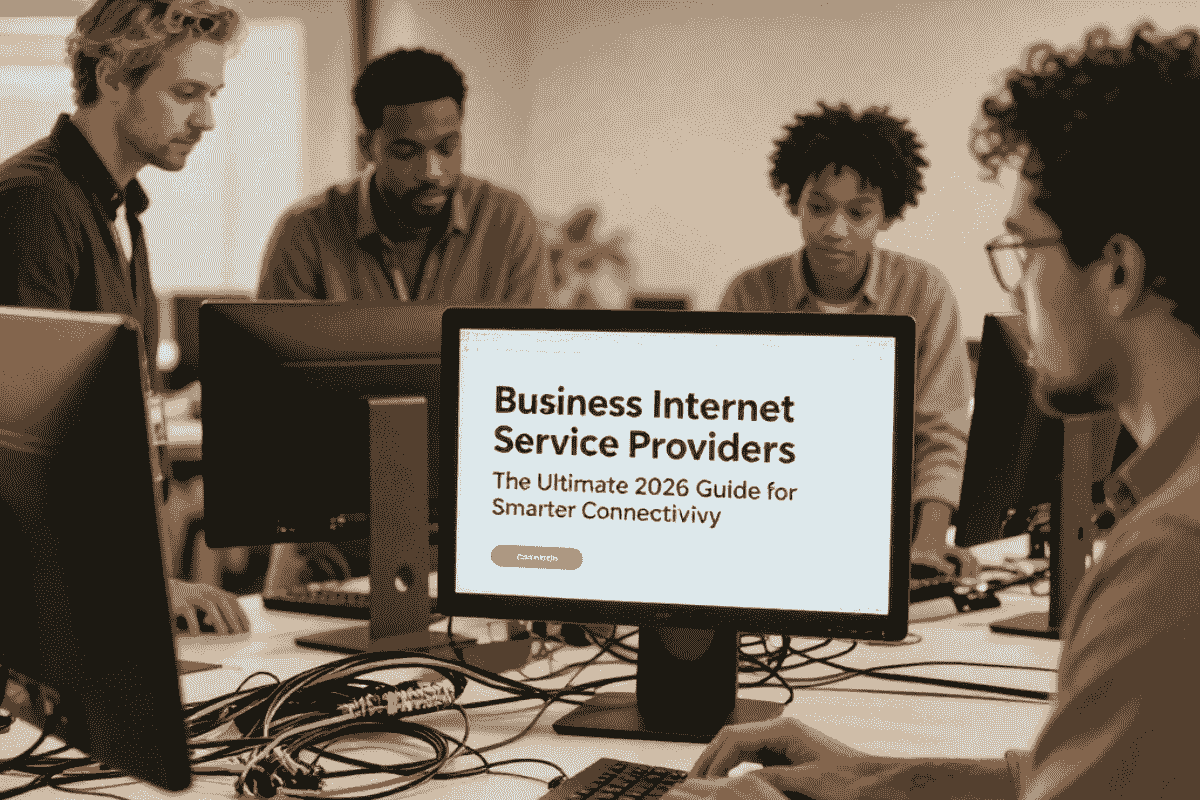
Nowadays, business Internet service providersplay a crucial role in the digital economy. Reliable, high-speed internet is the foundation of modern operations, from cloud-based tools and video conferences to E-commerce platforms, remote teams, as well as data intensive applications. Selecting the best business Internet service providers can increase productivity, improve customer experience, and give your company an enormous advantage. But bad connectivity can mean long periods of inoperative machinery, unhappy employees who cannot work properly, and even lost income.
This detailed guide identifies the top business Internet service providers, the key features to look for, various types of connections, and tips for small, medium, or large enterprises. With 2026 reviews and 197 comparisons from 2022, we’ll help you make an educated decision. Your startup may need affordable speed; your large enterprise, instead, could require ultra-reliable fiber with dates for support and technicians on call. These insights cover the entire spectrum.

Why Dedicated Business Internet Service Providers Matter
Consumer-grade internet (like home plans) often falls short for businesses. Business internet service providers typically offer:
- Higher uptime guarantees (99.9% or better)
- Symmetrical speeds (equal upload and download)
- Static IP addresses for hosting servers or secure remote access
- 24/7 dedicated support with business-trained technicians
- Service Level Agreements (SLAs) with credits for downtime
- Enhanced security features like advanced threat protection
In 2026, with AI tools, hybrid work, and massive data transfers becoming standard, investing in proper business internet service providers is non-negotiable. Downtime can cost small businesses thousands per hour—reliable connectivity protects your bottom line.
Key Factors to Consider When Choosing Business Internet Service Providers
Before comparing specific providers, evaluate these essential criteria:
- Speed and Bandwidth Needs: Assess daily usage. A small office with 10 users doing email and browsing may need 300-500 Mbps. Video-heavy teams or cloud storage users require 1 Gbps+. Look for symmetrical speeds.
- Connection Type:
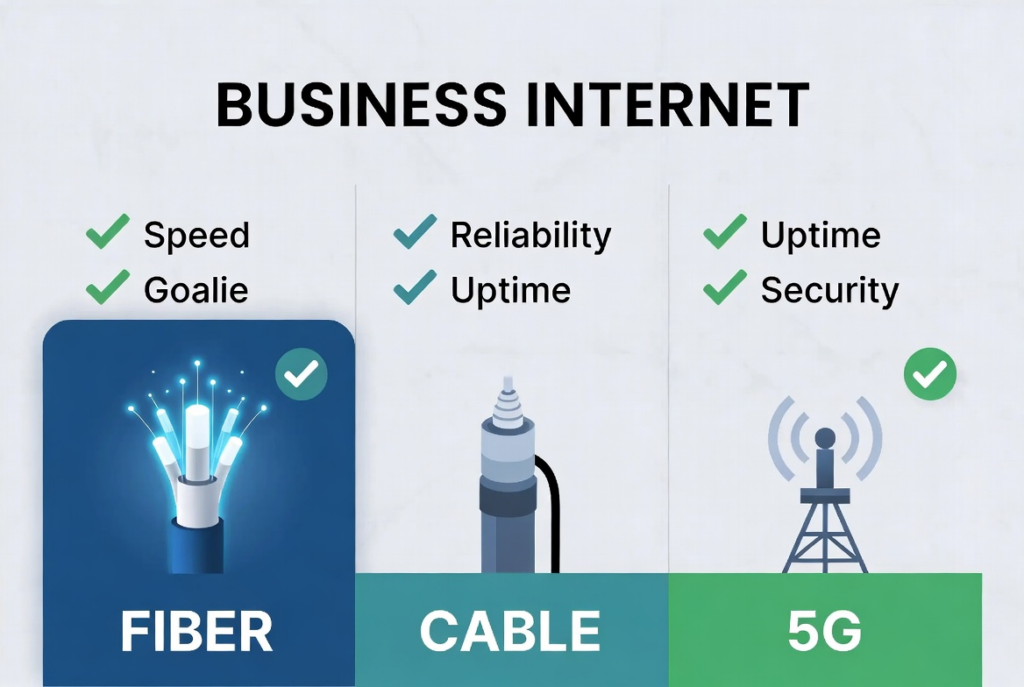
- Fiber: Fastest, most reliable, symmetrical speeds, low latency. Ideal for most businesses.
- Cable: Widely available, good speeds, but often asymmetrical and shared bandwidth (can slow down during peak hours).
- 5G/Fixed Wireless: Quick setup, flexible for mobile or temporary locations, but weather or congestion can affect performance.
- Satellite: Last resort for very rural areas, higher latency.
- Reliability and Uptime: Check SLAs and real-world reviews. Fiber generally outperforms cable.
- Pricing and Contracts: Business plans cost more than residential but include better support. Watch for promotional rates, installation fees, and contract length (many now offer no-contract options).
- Availability: Use provider websites with your address—coverage varies greatly by location.
- Customer Support: 24/7 phone/chat with business specialists is crucial.
- Extra Features: Managed WiFi, cybersecurity add-ons, VoIP integration, static IPs.
- Scalability: Can the plan grow with your business without major disruptions?
- Security: Built-in firewall, DDoS protection, and compliance features.
- Customer Satisfaction: Review J.D. Power scores and independent ratings.
Top Business Internet Service Providers in 2026
Here are the leading business internet service providers based on speed, reliability, customer satisfaction, and value in 2026 reviews:
1. Verizon Business Fios – Often ranked as the best overall.
With a fiber-optic network, we offer essentially the best of both worlds. People will find that they cannot believe it’s not expensive at all,l with download rates up to 2 Gbps (either 2,000 Mbps or 2,048 Mbps in some areas).With such a good speed choice excellent for uploading large files, running videoconferencing, es and operating cloud services. The company’s good reputation for reliability and customer service has led it to win many long-term, loyal customers. Pricing starts at about $69/month for 200 Mbps, up to $249 for 2 Gbps or more. It’s ideal for companies that make live performance and low latency a top priority.
2. AT&T Business Fiber – Top for customer satisfaction.
J.D. Power leader in enterprise segments. Symmetrical speeds from 300 Mbps to 5 Gbps. No annual contracts on many plans, pricing from ~$70 to $285/month. High marks for support and consistent performance. Great for medium to large businesses needing scalability and reliability.
3. Comcast Business (Xfinity Business) – Best for widespread availability.
Serves many states with cable and some fiber options. Speeds from 150 Mbps to 1.25+ Gbps. Starts around $50–$70/month. Good for suburban and areas where fiber isn’t fully deployed. Offers scalable plans and additional services like voice and security.
4. Spectrum Business – Excellent for flexibility and small businesses.
No-contract plans in many areas, making it easy to adjust. Tiers at 500 Mbps, 750 Mbps, and 1 Gbps (pricing ~$65–$115 for promotional periods). High satisfaction in small business segments per J.D. Power. Reliable cable-based service with easy setup.
5. EarthLink Business – Strong performer for high speeds.
Partners with major networks to deliver up to 5 Gbps fiber. Focuses on business-grade features with good uptime guarantees. Suitable for data-intensive operations.
Other notable mentions include Google Fiber Business (where available for ultra-high speeds), Frontier, Cox Business, and T-Mobile for Business (5G options for quick deployment).

Fiber vs. Cable vs. 5G: Which Connection Type Suits Your Business?
Fiber Optic: The gold standard for business internet service providers. With laser light signals, the lightning speed, the signal strength,s and reliability. In the condition of sparse interference and low latency, this is perfectly suited to applications that depend on real-time operation. Although the upfront costs are high, lower long-term maintenance and future-proofing make up for it. Most suitable for growing companies with high data transmission, voice, and video demand,s etc.
Cable: You Get What You Pay For. Downwardly mobile but more generally available. Relatively strong download speeds, but the upload speeds are usually slower. And as the area networks’ input peak usage, their performance may dip. Fit for small to medium businesses with average needs for bandwidth
5G/Fixed Wireless: Fast deployment (no digging cables), good speeds in covered urban areas. Useful as primary or backup. Can face variability from weather or congestion. Excellent for mobile teams or locations hard to wire.
Satellite: Reliable in remote areas,s but higher latency makes it less ideal for video calls or real-time work.
For most businesses in 2026, fiber from providers like Verizon or AT&T offers the best balance of performance and reliability.
How to Choose the Right Business Internet Service Providers for Your Needs
Small Businesses (1-50 employees): Focus on value and flexibility. Spectrum Business or Comcast Business often works well due to no/low contracts and decent speeds. If fiber is available, Verizon or AT&T provides better long-term performance without breaking the bank.
Medium Businesses: Prioritize symmetrical speeds and support. AT&T Business Fiber or Verizon shine here with scalable plans and enterprise features.
Large Enterprises: Demand dedicated connections, SLAs, and advanced security. Verizon and AT&T lead with robust infrastructure.
Steps to Select:
- Determine your bandwidth requirements (calculate users + applications).
- Check availability by entering your business address on provider sites.
- Compare quotes including installation, equipment, and any promotional pricing.
- Read recent customer reviews focusing on support during outages.
- Ask about backup options (many offer 5G failover).
- Consider bundling with phone, security, or managed services for savings.
Test speeds after installation using tools like Ookla or provider apps. Monitor for the first month.

Additional Benefits from Quality Business Internet Service Providers
Beyond raw speed, top providers offer:
- Managed WiFi and Networking: Professional setup for whole-office coverage.
- Cybersecurity Tools: Protection against threats that target businesses.
- VoIP and Unified Communications: Reliable phone systems over the internet.
- Data Backup and Cloud Integration: Seamless with services like Microsoft 365 or AWS.
- Analytics and Monitoring: Insights into usage patterns for optimization.
These extras turn basic connectivity into a strategic advantage.
Common Pitfalls to Avoid
- Choosing based only on the lowest price—downtime costs more.
- Ignoring upload speeds (critical for backups and video).
- Overlooking contract terms and early termination fees.
- Not planning for growth—start with scalable options.
- Skipping a site survey for proper equipment placement.
Future Trends in Business Internet
By 2026, when HBO’s 8-bit video high-bandwidth 5G standard becomes reality throughout the board games and holographic advertising sectors across the Asia Pacific, then we can expect wider fiber roll-out without too much latency (or spurts) of delivery. Real multi-gigabit speeds will become the industry norm. Of course, 5G-integrated fiber will also be a backup. Then maybe large enterprises will employ AI-driven network management techniques further to increase reliability. The premium business internet service provider that businesses are installing with should help them exploit new technologies like VR, collaboration, and massive IoT deployments.
Conclusion: Find the Best Business Internet Service Providers for Your Success
To operate efficiently, one of the most vital decisions you’ll ever make is selecting a business internet service provider. According to a new survey, the most highly recommended providers in 2026 are Verizon Business, AT&T Business, Spectrum Business, and Comcast Business experienced in both speed and support.
Determine what you need looking ahead, see what’s available in your local area, then ask 2 or 3 suppliers for price quotations.
A reliable internet connection is not a luxury. It’s essential infrastructure. Investment will mean smooth operations for your business staff members, who will be happier and have more space to grow–down the line, up to cheaper rates than you can now imagine for getting. The cost of being blind with tomorrow’s money stands.
The prices and plans in this guide for business internet service providers are for your information. Consult IT professionals if you have a setup.