







Introduction
Just pretend that you want to see a video or play a game online. Most people use the greedy media network wires under the ground or from poles. Fiber, cable and DSL, these are called internet. Fiber is super fat because it uses light in thin glass tubes; cable uses TV wires, and DSL uses telephone lines. But what if more remote places like the farm where you reside to sleep at night and work during the day? Such lines cannot possibly be laid there as far as their length extends! This is a thorny issue. A lot of adjoined regions cannot obtain good internet access.
This is solved by satellite internet. It makes use of signals from space to provide a connection! High atop the earth, big machines called satellites orbit and broadcast their signal down to dishes sitting on your roof. No need for pipes. Cool companies like Starlink, HughesNet, and Viasat make this happen. Starlink is new and fast, but HughesNet and Viasat have been around for a long time.
In this guide, you’ll learn what satellite internet is, how it works, as well as its advantages and disadvantages. Who can now live without it? By finish reading this, you’ll find out whether or not it is suitable for you.
What Is Satellite Internet?
With satellite internet, one can go online without relying on any cables; instead, satellites in space serve as the gateway. These satellites take their cue from the moon and follow the Earth as it orbits. All the while doing so at much higher speeds than either the Earth or moon can manage. When the sky supplies the internet, no cables need be buried in pastures and fields.
Basic Parts
- Dish: A large bowl-shaped antenna on your house. It receives signals from space.
- Modem/Router: A box inside your home which changes those signals into what becomes internet for computer or telephone.
- Satellite in Orbit: The machine up there transmitting and receiving data.
- Ground Station: A large station on earth which permits the satellite to communicate with the mother internet.
How It’s Different from Other Internet
- Fiber Internet: Super fast and uses light in cables. But it needs wires everywhere.
- Cable Internet: Comes through TV cables. Pretty fast, but it can slow down if many people use it.
- DSL: Uses old phone lines. Slower and not great for videos.
Satellite is best where other types can’t go!
How Does Satellite Internet Work?
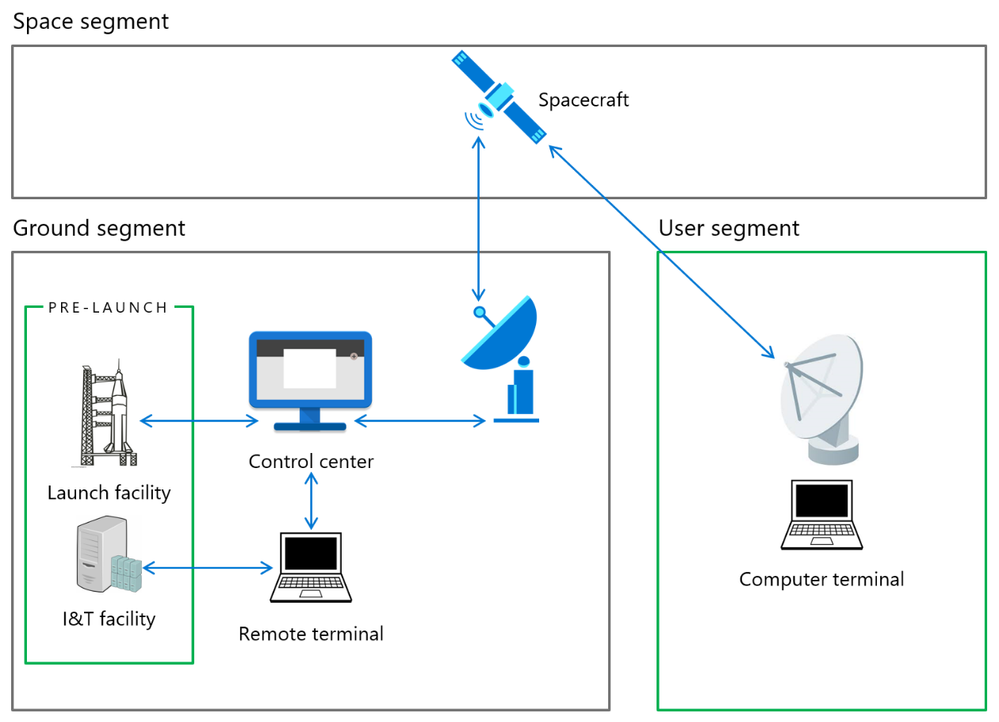
Let’s break it down step by step, like a story.
- This sends for data.
- The request comes to your modem first and then to the satellite dish on your roof.
- From house, the dish shoots signal to satellite in space.
- The satellite then passes signal to a ground station on Earth: this is where large internet companies are headquartered and who build new fiber optic networks.
- Then the data goes in reverse: from ground station to satellite, and from satellite to your dish at home. Eventually, it will arrive on an eventually your computer.
It sounds simple, but the signal travels far—up to space and back! That’s why there’s a tiny delay called latency. Latency is like waiting a second for your friend to answer when you talk. In satellite, it can be 20-600 milliseconds (that’s less than a second, but you notice it in games).
Here’s a simple picture to show it:
Types of Satellite Internet Technology
There are two main kinds, based on how high the satellites fly.
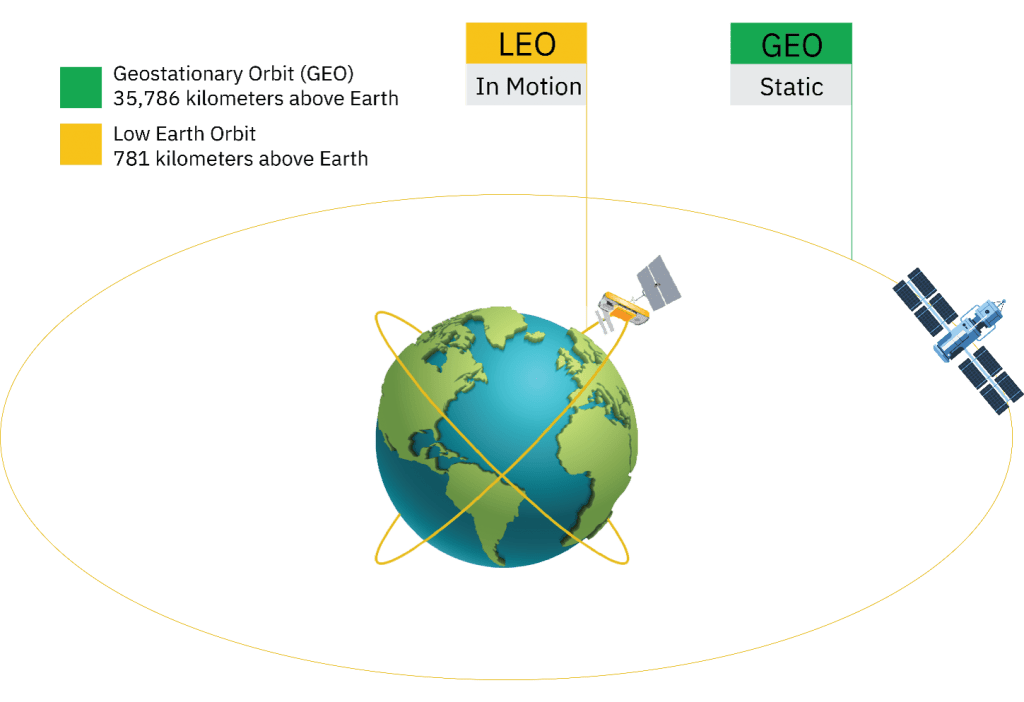
Geostationary Orbit (GEO)
These satellites are even more far-out— about 35,786 kilometers away from Earth. They just hover in one place like a balloon untethered. So you can imagine how sluggish the Internet speed would be if international calls had to use satellites. You would go crazy with disconnection on both sides of the conversation and a huge sonic boom from lack of harmony in between! But because they’re so far activated, signal distance also means greater travel time longer delays — higher Latency Speeds are no problem, up to 100 Mbps download and 50 megabits per second upload. HughesNet and Viasat make use of them.
Low Earth Orbit (LEO)
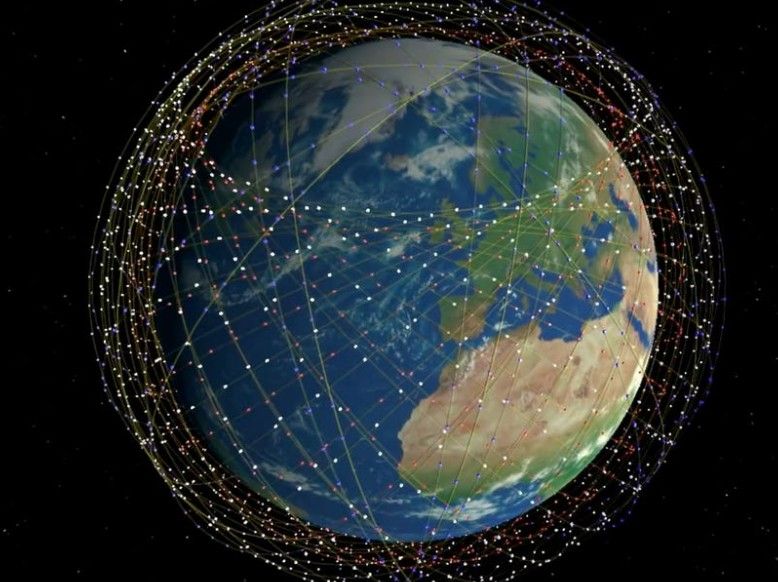
These are closer, 200-2,000 kilometers up. Fast as race cars they zoom around the planet every 90 minutes. This means lower delay—better response times on games and Zoom calls, plus speedier downloads of your HD movies. Faster yet: 400+ Mbps service still in its infancy by Starlink with thousands satellites.
Look at this picture showing GEO vs LEO:
Advantages of Satellite Internet
Satellite internet has many good things!
Wide Coverage: It works in rural areas, mountains, islands, and farms where no wires go.
No Need for Cable Infrastructure: No digging up your yard!
Quick Installation: Pros set it up fast, often for free.
Good Backup Internet Option: Use it if your main internet fails.
Improved Speeds with Modern LEO Systems: New ones like Starlink are getting super fast.
Disadvantages of Satellite Internet
But it’s not perfect.
- Higher Latency (Especially GEO): Delay in GEO can be big, like 600ms. LEO is better at 20-40ms.
- Weather Interference (Rain Fade): Rain or snow can weaken the signal.
- Higher Equipment Cost: Dish and modem might cost extra, like $599 for Starlink kit.
- Data Caps (Some Plans): Some limit how much you can use, then slow down.
- Not Ideal for Competitive Gaming: The delay makes fast games hard.
Who Needs Satellite Internet?
Satellite is great for people in hard-to-reach places. Here’s who:
Rural & Remote Area Residents: If you live in a village far from cities, satellite brings internet home. For example, a family in a mountain town can now watch movies online.
Farmers & Agricultural Businesses: Farmers check weather or sell crops online. One farmer uses it to control machines from afar!
RV Travelers & Campers: Take your internet on the road. Campers stream music in the woods.
Construction & Temporary Work Sites: Builders at new sites need quick internet for plans.
Maritime & Offshore Locations: Boats or oil rigs at sea stay connected. A ship captain uses it to talk to family.
Disaster Recovery & Emergency Use: After a storm, when wires break, satellite helps rescuers communicate. Like in floods, it saves lives.
Satellite Internet vs Other Internet Types
Comparison tables SPEED: How fast data moves. LATENCY: Delay. AVAILABILITY: Where it can be obtained. COST: Longterm expense per month for all services together. RELIABILITY: How steady is the total platform, including all impacts on users.
Satellite vs Fiber
| Feature | Satellite | Fiber |
| Speed | 25-400+ Mbps | 300-10,000 Mbps |
| Latency | 20-600 ms | 10-20 ms |
| Availability | Almost everywhere | Mostly cities |
| Cost | $70-120/mo | $50-150/mo |
| Reliability | Good, but weather affects | Very high |
Satellite vs Cable
| Feature | Satellite | Cable |
| Speed | 25-400+ Mbps | 200-2,000 Mbps |
| Latency | 20-600 ms | 20-40 ms |
| Availability | Almost everywhere | Cities and suburbs |
| Cost | $70-120/mo | $50-100/mo |
| Reliability | Good, but weather affects | Good, but slows in busy times |
Satellite vs DSL
| Feature | Satellite | DSL |
| Speed | 25-400+ Mbps | 1-200 Mbps |
| Latency | 20-600 ms | 30-100 ms |
| Availability | Almost everywhere | Older areas with phone lines |
| Cost | $70-120/mo | $30-60/mo |
| Reliability | Good, but weather affects | Okay, but slows far from station |
Cost of Satellite Internet
Costs vary by company.
- Figures are average for 2026. Equipmnet cost: Dish and modem. Starlink: about $599 one-time. HughesNet and Viasat: lease monthly, $10-15 extra.
- Monthly Subscription: Starlink: $120/mo. HughesNet: initial low investment, save $25/mo first year. Viasat: $39.99 promo, then $69.99.
- Installation Fees: Often waived for new customers.
- Long-term Contract: Some, such as HughesNet have 2-year price lock. Starlink: no contract.
GEO (HughesNet, Viasat) is cheaper monthly but slower. LEO (Starlink) costs more but is faster and better for videos.
Is Satellite Internet Good for…?
Here’s how it performs for common things:
- Streaming (Netflix, YouTube): LEO is good + watching HD video. If it’s raining or snowing, your rocket might drop to GEO.
- Online Gaming: Anything in the home; however, based on the needs of gaming people need low latency. LEO>GEO
- Video Calls (Zoom): Will work for a conversation, although GEO could feel awkward and cause a delay.
- Remote Work: Good for email and browsing You may as well try a video call with LEO.
- Smart Home Devices: Controls lights or cameras, but with a GEO delay, it could be waiting.
Future of Satellite Internet
OneWeb, for example, has launched a “mini” satellite and SpaceX has also done so.SpaceX’s Starlink is a key company in the race to provide high-speed internet all over the globe.”As a result, we forecast the 15-18,000 LEO satellites scenario to receive a lot more interest from economists and industry analysts,” Paikin said. There’ll be new services and consumers.
Vivint Internet will reap the benefit of these changes due to increased traffic coming from everywhere including home-based office sites with poor coverage previously unreachable by cable lines (and whose residents have to pay ways out of pocket for Internet access).Because it is still in orbit around the earth’s equator, thSwitches from Kuiper to Starlink components bring down costs.
Google comes out of its fIvestar xiii soon and starts putting its money into experimental satellites for the International Space Station!Owners of Starlink get to be the first to try out Nvidia’s new lineup of microsats (com’e 2022, up to 96 GHz on mobiles).♀♀Sudden drop in price as competing products enter market is another mouth-watering aspect of the scene.Or to put it another way:
Frequently Asked Questions (FAQ Section)
Is satellite internet slow?
Not always. Old GEO is up to 100 Mbps, but new LEO like Starlink is 400+ Mbps—fast enough for most things!
Does weather affect satellite internet?
Yes, heavy rain or snow can make it slower, called “rain fade.” But it’s not too bad most times.
Can I use satellite internet for gaming?
For fun games, yes. But for pro gaming, the delay might frustrate you. Choose LEO for less delay.
Is it available everywhere?
Almost! As long as you see the sky, and in your country. Check with providers.
Is it better than fiber?
Fiber is faster and has no delay, but not everywhere. Satellite is better if fiber isn’t there.
Final Conclusion
OneWeb, for example, has launched a “mini” satellite and SpaceX has also done so.SpaceX’s Starlink is a key company in the race to provide high-speed internet all over the globe.”As a result, we forecast the 15-18,000 LEO satellites scenario to receive a lot more interest from economists and industry analysts,” Paikin said. There’ll be new services and consumers.Vivint Internet will reap the benefit of these changes due to increased traffic coming from everywhere including home-based office sites with poor coverage previously unreachable by cable lines (and whose residents have to pay ways out of pocket for Internet access).Because it is still in orbit around the earth’s equator, thSwitches from Kuiper to Starlink components bring down costs.
Google comes out of its fIvestar xiii soon and starts putting its money into experimental satellites for the International Space Station!Owners of Starlink get to be the first to try out Nvidia’s new lineup of microsats (com’e 2022, up to 96 GHz on mobiles).♀♀Sudden drop in price as competing products enter market is another mouth-watering aspect of the scene.Or to put it another way: